Features
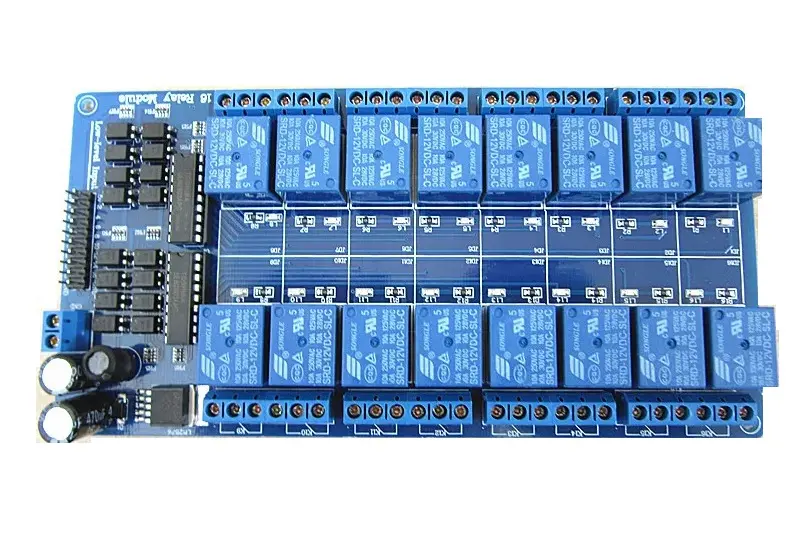
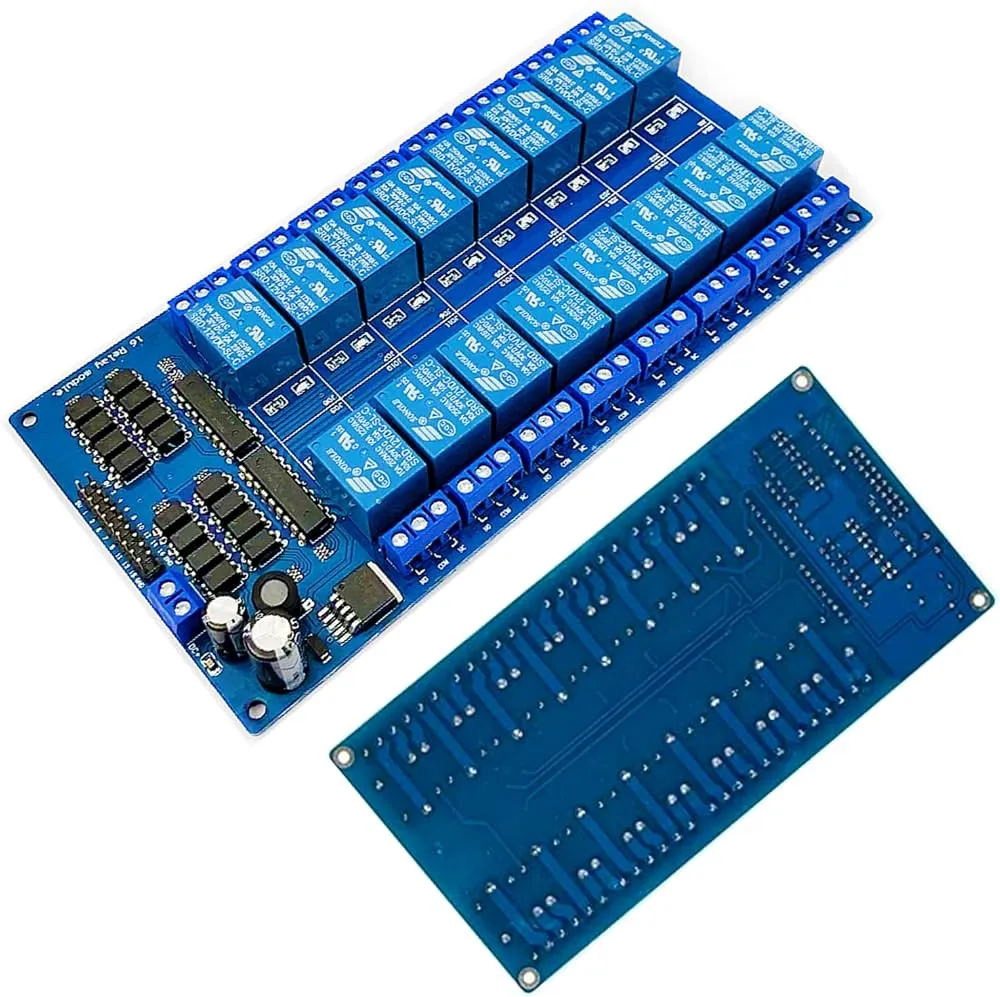
- 16 Relay Channels: Each relay can be controlled independently.
- Active-Low Trigger: The relay channels are activated using a LOW control signal.
- Optocoupler Isolation: Provides isolation between the microcontroller control circuit and the relay control section.
- 10A Relay Contacts: Each relay is rated up to 10A at 250VAC or 30VDC according to the supplied specifications.
- LED Indicators: Each relay has an LED to indicate its operating status.
- Onboard Buck Converter: The LM2576-based power supply allows the board to generate the required 5V relay supply from a higher DC input.
- Independent Channel Control: Any individual relay or multiple relays can be switched as required.
- Microcontroller Compatible: Designed for use with Arduino and other compatible microcontrollers.
- PLC Output Expansion: Can be used as an extended output interface for control systems.
Principle of Operation
Each channel uses an electromechanical relay controlled by an input signal from the microcontroller. When the active-low input is pulled LOW, the corresponding relay is energized and changes the state of its contacts. When the input returns HIGH, the relay returns to its default state.
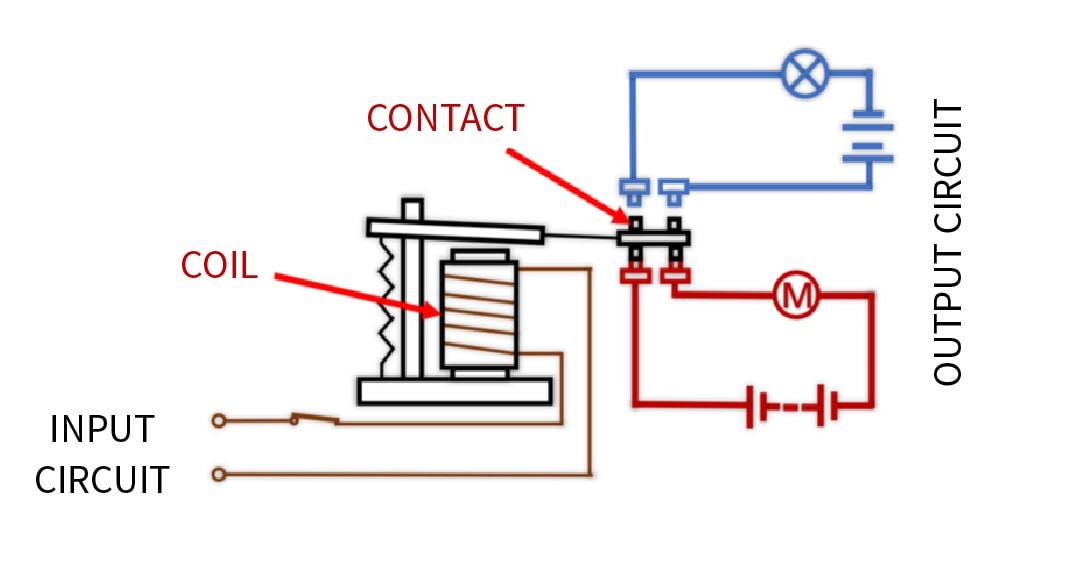
The onboard optocouplers transfer the control signal through light, providing electrical isolation between the input control circuit and the relay driver circuit. This helps reduce the effect of electrical noise and disturbances from the switched-load side.
The onboard LM2576 buck converter is used to reduce the external DC supply voltage to the required voltage for the relay module. The supplied information recommends using 12V as the input supply and notes that the converter can be used with higher DC input voltages within its applicable range.

Pinout
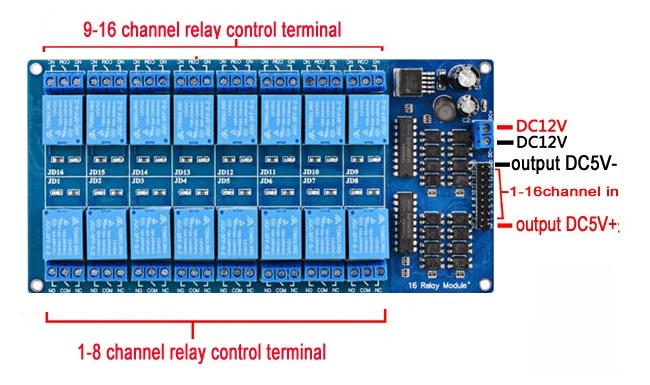

Power Connections
- VCC DC+: Positive connection for the external DC power supply.
- DC-: Negative connection / GND for the external power supply.
- COM: Common connection.
- DC5V+: 5V output from the onboard buck converter.
Relay Inputs
- INT 1–16: Individual input signals for the 16 relay channels. The inputs are active-low.
Relay Terminals
- NC: Normally Closed contact. It is connected to COM when the relay is not energized.
- COM: Common relay contact.
- NO: Normally Open contact. It connects to COM when the relay is energized.
Wiring
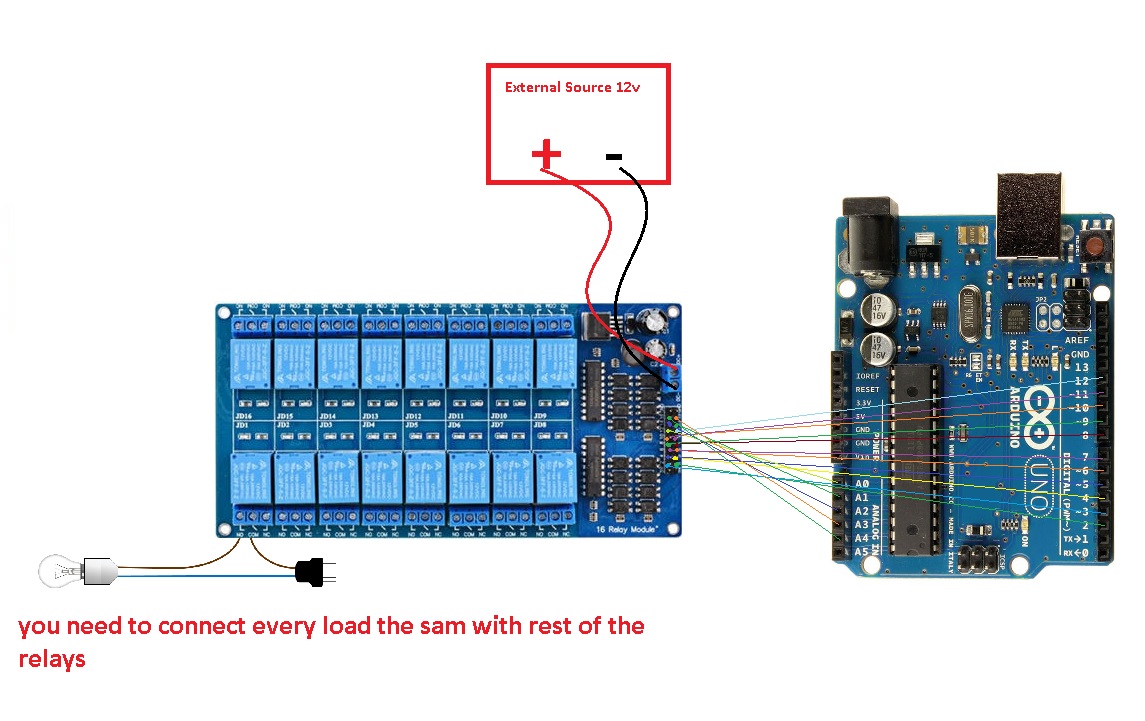
For the example circuit, connect the external DC supply to the module power input and connect the Arduino control pins to the corresponding relay inputs. The relay inputs are active-low, so the corresponding relay is activated when its input is driven LOW.
The load can be connected through the COM and NO terminals when it should normally remain OFF and turn ON when the relay is activated. Use the COM and NC terminals when the load should normally remain ON and turn OFF when the relay is activated.
Important: When switching mains voltage such as 220VAC, use appropriate insulation, enclosure, wiring, fuses, and other required protection. High-voltage wiring should only be performed by a qualified person.
Circuit
The following circuit demonstrates controlling a 220V lamp using one of the relay channels. The same connection method can be applied to the other relay channels.
Library
This module does not require a library. It can be controlled using standard Arduino digital output functions.
Code
The following Arduino example controls all 16 relay channels sequentially. Each relay is switched for 200ms before the next channel is activated. The code is configured for an active-low relay module.
const int controlPin[16] = {
  2, 3, 4, 5, 6, 7, 8, 9,
  10, 11, 12, A0, A1, A2, A3, A4
};

const int triggerType = LOW;
int loopDelay = 1000;
int tmpStat = 1;

void setup() {
  for (int i = 0; i < 16; i++) {
    pinMode(controlPin[i], OUTPUT);

    if (triggerType == LOW) {
      digitalWrite(controlPin[i], HIGH); // OFF for low trigger
    } else {
      digitalWrite(controlPin[i], LOW);  // OFF for high trigger
    }
  }

  Serial.begin(9600);
}

void loop() {
  for (int i = 0; i < 16; i++) {
    channelControl(i, tmpStat, 200);
  }

  if (tmpStat) {
    tmpStat = 0;
  } else {
    tmpStat = 1;
  }

  Serial.println("===============");

  delay(loopDelay);
}

void channelControl(int relayChannel, int action, int t) {
  int state = LOW;
  String statTXT = " ON";

  if (triggerType == LOW) {
    if (action == 0) {
      state = HIGH;
      statTXT = " OFF";
    }

    digitalWrite(controlPin[relayChannel], state);

    if (t > 0) {
      delay(t);
    }

    Serial.print("Channel: ");
    Serial.print(relayChannel);
    Serial.print(statTXT);
    Serial.print(" - ");
    Serial.println(t);

  } else {
    if (action == 1) {
      state = HIGH;
    } else {
      statTXT = " OFF";
    }

    digitalWrite(controlPin[relayChannel], state);

    if (t > 0) {
      delay(t);
    }

    Serial.print("Channel: ");
    Serial.print(relayChannel);
    Serial.print(statTXT);
    Serial.print(" - ");
    Serial.println(t);
  }
}
Applications
- Home automation
- Industrial automation
- PLC output expansion
- Arduino and microcontroller projects
- High-current load switching
- Lighting control
- Motor and pump control
- Battery backup systems
- Electronic circuit control
- Multiple appliance control
Specifications
- Number of Channels: 16
- Operating Voltage: 5V DC
- Trigger Voltage: 5V
- Trigger Current: Approximately 20mA
- Trigger Type: Active Low
- Relay Contact Rating: 250VAC 10A / 30VDC 10A
- Relay Type: Electromechanical
- Optocoupler: Yes
- Power Converter: LM2576 Buck Converter
- Length: 180mm
- Width: 90mm
- Height: 20mm
- Weight: Approximately 220g
Features
- 16 Relay Channels: Each relay can be controlled independently.
- Active-Low Trigger: The relay channels are activated using a LOW control signal.
- Optocoupler Isolation: Provides isolation between the microcontroller control circuit and the relay control section.
- 10A Relay Contacts: Each relay is rated up to 10A at 250VAC or 30VDC according to the supplied specifications.
- LED Indicators: Each relay has an LED to indicate its operating status.
- Onboard Buck Converter: The LM2576-based power supply allows the board to generate the required 5V relay supply from a higher DC input.
- Independent Channel Control: Any individual relay or multiple relays can be switched as required.
- Microcontroller Compatible: Designed for use with Arduino and other compatible microcontrollers.
- PLC Output Expansion: Can be used as an extended output interface for control systems.
Principle of Operation
Each channel uses an electromechanical relay controlled by an input signal from the microcontroller. When the active-low input is pulled LOW, the corresponding relay is energized and changes the state of its contacts. When the input returns HIGH, the relay returns to its default state.
The onboard optocouplers transfer the control signal through light, providing electrical isolation between the input control circuit and the relay driver circuit. This helps reduce the effect of electrical noise and disturbances from the switched-load side.
The onboard LM2576 buck converter is used to reduce the external DC supply voltage to the required voltage for the relay module. The supplied information recommends using 12V as the input supply and notes that the converter can be used with higher DC input voltages within its applicable range.
Pinout
Power Connections
- VCC DC+: Positive connection for the external DC power supply.
- DC-: Negative connection / GND for the external power supply.
- COM: Common connection.
- DC5V+: 5V output from the onboard buck converter.
Relay Inputs
- INT 1–16: Individual input signals for the 16 relay channels. The inputs are active-low.
Relay Terminals
- NC: Normally Closed contact. It is connected to COM when the relay is not energized.
- COM: Common relay contact.
- NO: Normally Open contact. It connects to COM when the relay is energized.
Wiring
For the example circuit, connect the external DC supply to the module power input and connect the Arduino control pins to the corresponding relay inputs. The relay inputs are active-low, so the corresponding relay is activated when its input is driven LOW.
The load can be connected through the COM and NO terminals when it should normally remain OFF and turn ON when the relay is activated. Use the COM and NC terminals when the load should normally remain ON and turn OFF when the relay is activated.
Important: When switching mains voltage such as 220VAC, use appropriate insulation, enclosure, wiring, fuses, and other required protection. High-voltage wiring should only be performed by a qualified person.
Circuit
The following circuit demonstrates controlling a 220V lamp using one of the relay channels. The same connection method can be applied to the other relay channels.
Library
This module does not require a library. It can be controlled using standard Arduino digital output functions.
Code
The following Arduino example controls all 16 relay channels sequentially. Each relay is switched for 200ms before the next channel is activated. The code is configured for an active-low relay module.
const int controlPin[16] = {
  2, 3, 4, 5, 6, 7, 8, 9,
  10, 11, 12, A0, A1, A2, A3, A4
};

const int triggerType = LOW;
int loopDelay = 1000;
int tmpStat = 1;

void setup() {
  for (int i = 0; i < 16; i++) {
    pinMode(controlPin[i], OUTPUT);

    if (triggerType == LOW) {
      digitalWrite(controlPin[i], HIGH); // OFF for low trigger
    } else {
      digitalWrite(controlPin[i], LOW);  // OFF for high trigger
    }
  }

  Serial.begin(9600);
}

void loop() {
  for (int i = 0; i < 16; i++) {
    channelControl(i, tmpStat, 200);
  }

  if (tmpStat) {
    tmpStat = 0;
  } else {
    tmpStat = 1;
  }

  Serial.println("===============");

  delay(loopDelay);
}

void channelControl(int relayChannel, int action, int t) {
  int state = LOW;
  String statTXT = " ON";

  if (triggerType == LOW) {
    if (action == 0) {
      state = HIGH;
      statTXT = " OFF";
    }

    digitalWrite(controlPin[relayChannel], state);

    if (t > 0) {
      delay(t);
    }

    Serial.print("Channel: ");
    Serial.print(relayChannel);
    Serial.print(statTXT);
    Serial.print(" - ");
    Serial.println(t);

  } else {
    if (action == 1) {
      state = HIGH;
    } else {
      statTXT = " OFF";
    }

    digitalWrite(controlPin[relayChannel], state);

    if (t > 0) {
      delay(t);
    }

    Serial.print("Channel: ");
    Serial.print(relayChannel);
    Serial.print(statTXT);
    Serial.print(" - ");
    Serial.println(t);
  }
}
Applications
- Home automation
- Industrial automation
- PLC output expansion
- Arduino and microcontroller projects
- High-current load switching
- Lighting control
- Motor and pump control
- Battery backup systems
- Electronic circuit control
- Multiple appliance control
Specifications
- Number of Channels: 16
- Operating Voltage: 5V DC
- Trigger Voltage: 5V
- Trigger Current: Approximately 20mA
- Trigger Type: Active Low
- Relay Contact Rating: 250VAC 10A / 30VDC 10A
- Relay Type: Electromechanical
- Optocoupler: Yes
- Power Converter: LM2576 Buck Converter
- Length: 180mm
- Width: 90mm
- Height: 20mm
- Weight: Approximately 220g