- All products
- Sensors & Modules
- Multiplexer&Demultiplexer
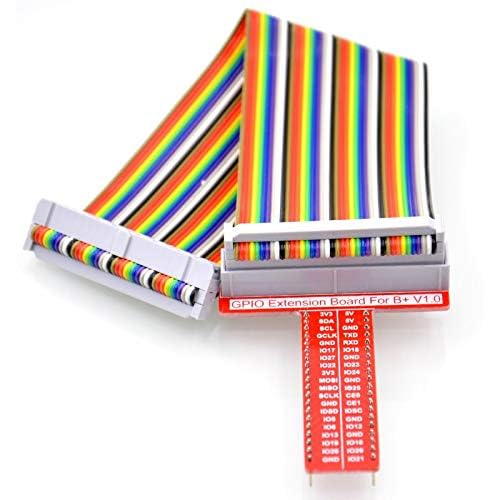
- Raspberry Pi GPIO T-Expansion Board DIY Kit With Cable
- Multiplexer&Demultiplexer
Features:
- Compatible with Raspberry Pi 3B+, 3B, 2B, 1B+, 1A+, Zero W, and Raspberry Pi Zero.
- T-shaped GPIO breakout design for easy breadboard integration.
- Breaks out Power, GPIO, I2C, and SPI interfaces.
- 40-pin ribbon cable ensures stable and reliable connection.
- No soldering required for quick prototyping.
- Reduces wiring complexity and improves development speed.
- Supports multiple Raspberry Pi models with 40-pin GPIO header.
Pinout of the Module:
The board follows the standard Raspberry Pi 40-pin GPIO layout, including:
- Power Pins (3.3V, 5V)
- Ground Pins (GND)
- GPIO Pins (General Purpose Input/Output)
- I2C Interface Pins (SDA, SCL)
- SPI Interface Pins (MOSI, MISO, SCLK, CE)
- UART Pins (TX, RX)
Principle of Work:
The GPIO extension board works by mapping the Raspberry Pi’s 40-pin header to an external breakout interface, allowing direct access to hardware communication lines.
- Signal Extension: Extends GPIO, power, and communication pins to breadboard.
- Ribbon Cable Connection: Maintains stable electrical connection between Pi and breakout board.
- Breadboard Interface: Enables easy circuit assembly without soldering.
How to Use:
- Power off the Raspberry Pi before connecting the extension board.
- Attach the 40-pin ribbon cable to the Raspberry Pi GPIO header.
- Connect the other end to the T Type GPIO extension board.
- Insert the breakout board into a breadboard if required.
- Connect sensors or modules to the breakout pins.
- Power on the Raspberry Pi and begin testing connections.
Specifications:
- Module Type: T Type GPIO Extension Adapter
- Compatibility: Raspberry Pi 40-pin models
- Ribbon Cable Length: 20cm
- Connector Type: 40-pin GPIO header
- Function: GPIO breakout to breadboard
- Installation: Plug and play (no soldering required)
Applications:
- Raspberry Pi prototyping projects.
- Educational electronics experiments.
- Sensor and module testing.
- IoT development systems.
- Embedded system debugging and development.
Resources:
Features:
- Compatible with Raspberry Pi 3B+, 3B, 2B, 1B+, 1A+, Zero W, and Raspberry Pi Zero.
- T-shaped GPIO breakout design for easy breadboard integration.
- Breaks out Power, GPIO, I2C, and SPI interfaces.
- 40-pin ribbon cable ensures stable and reliable connection.
- No soldering required for quick prototyping.
- Reduces wiring complexity and improves development speed.
- Supports multiple Raspberry Pi models with 40-pin GPIO header.
Pinout of the Module:
The board follows the standard Raspberry Pi 40-pin GPIO layout, including:
- Power Pins (3.3V, 5V)
- Ground Pins (GND)
- GPIO Pins (General Purpose Input/Output)
- I2C Interface Pins (SDA, SCL)
- SPI Interface Pins (MOSI, MISO, SCLK, CE)
- UART Pins (TX, RX)
Principle of Work:
The GPIO extension board works by mapping the Raspberry Pi’s 40-pin header to an external breakout interface, allowing direct access to hardware communication lines.
- Signal Extension: Extends GPIO, power, and communication pins to breadboard.
- Ribbon Cable Connection: Maintains stable electrical connection between Pi and breakout board.
- Breadboard Interface: Enables easy circuit assembly without soldering.
How to Use:
- Power off the Raspberry Pi before connecting the extension board.
- Attach the 40-pin ribbon cable to the Raspberry Pi GPIO header.
- Connect the other end to the T Type GPIO extension board.
- Insert the breakout board into a breadboard if required.
- Connect sensors or modules to the breakout pins.
- Power on the Raspberry Pi and begin testing connections.
Specifications:
- Module Type: T Type GPIO Extension Adapter
- Compatibility: Raspberry Pi 40-pin models
- Ribbon Cable Length: 20cm
- Connector Type: 40-pin GPIO header
- Function: GPIO breakout to breadboard
- Installation: Plug and play (no soldering required)
Applications:
- Raspberry Pi prototyping projects.
- Educational electronics experiments.
- Sensor and module testing.
- IoT development systems.
- Embedded system debugging and development.
Resources: