Features
- Based on the high-performance ATmega2560 microcontroller.
- 54 digital I/O pins for connecting sensors, modules, displays, motors, and other peripherals.
- 16 analog input pins for reading analog sensors and signals.
- 15 PWM-capable digital pins for motor speed, LED brightness, and other PWM applications.
- 4 hardware UART serial ports for connecting multiple serial devices simultaneously.
- 256 KB Flash memory for larger and more complex programs.
- Compatible with the Arduino IDE and standard Arduino libraries.
- Supports a wide range of Arduino Mega-compatible shields and modules.
- CH340 USB-to-Serial interface for programming and serial communication.
- 16 MHz operating clock for reliable microcontroller operation.
- Suitable for robotics, automation, IoT, education, prototyping, and embedded systems.
- Black and yellow PCB design.
Principle of Operation
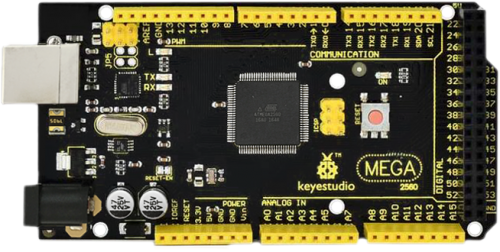
The Keyestudio MEGA 2560 is controlled by the ATmega2560 microcontroller. Programs are written using the Arduino IDE and transferred to the board through the USB interface. Once programmed, the microcontroller executes the uploaded code and controls connected sensors, actuators, displays, communication modules, and other peripherals through its digital and analog I/O pins.
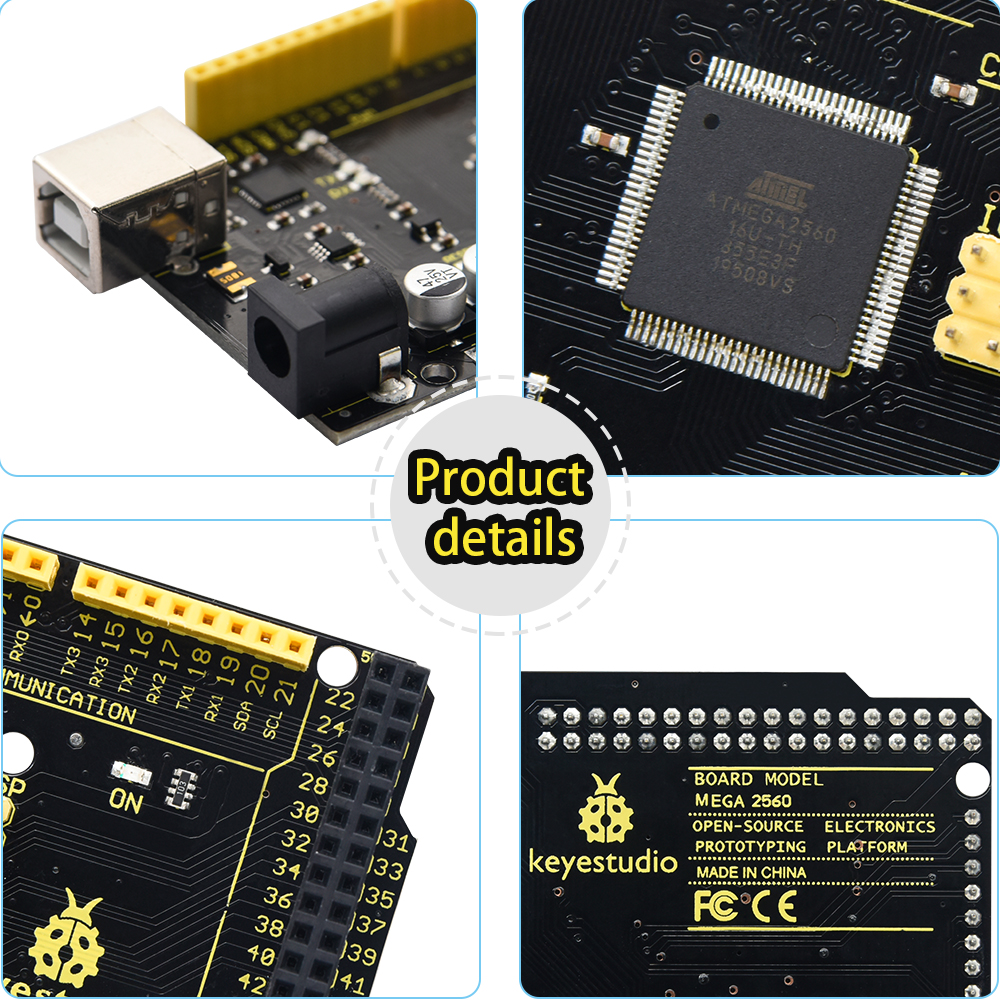
The board provides four independent hardware serial interfaces, allowing multiple UART-based devices to communicate with the microcontroller without relying on software-based serial communication. This makes the MEGA 2560 particularly useful for projects involving several communication modules at the same time.
Applications
- Robotics and robotic control systems
- Home and industrial automation prototypes
- IoT and connected embedded systems
- Multi-sensor monitoring systems
- Motor and actuator control
- LCD, TFT, OLED, and other display projects
- GPS, GSM, Bluetooth, and other serial communication projects
- Educational electronics and Arduino programming
- Embedded systems prototyping
- Projects requiring more I/O pins and memory than an Arduino UNO
Pinout
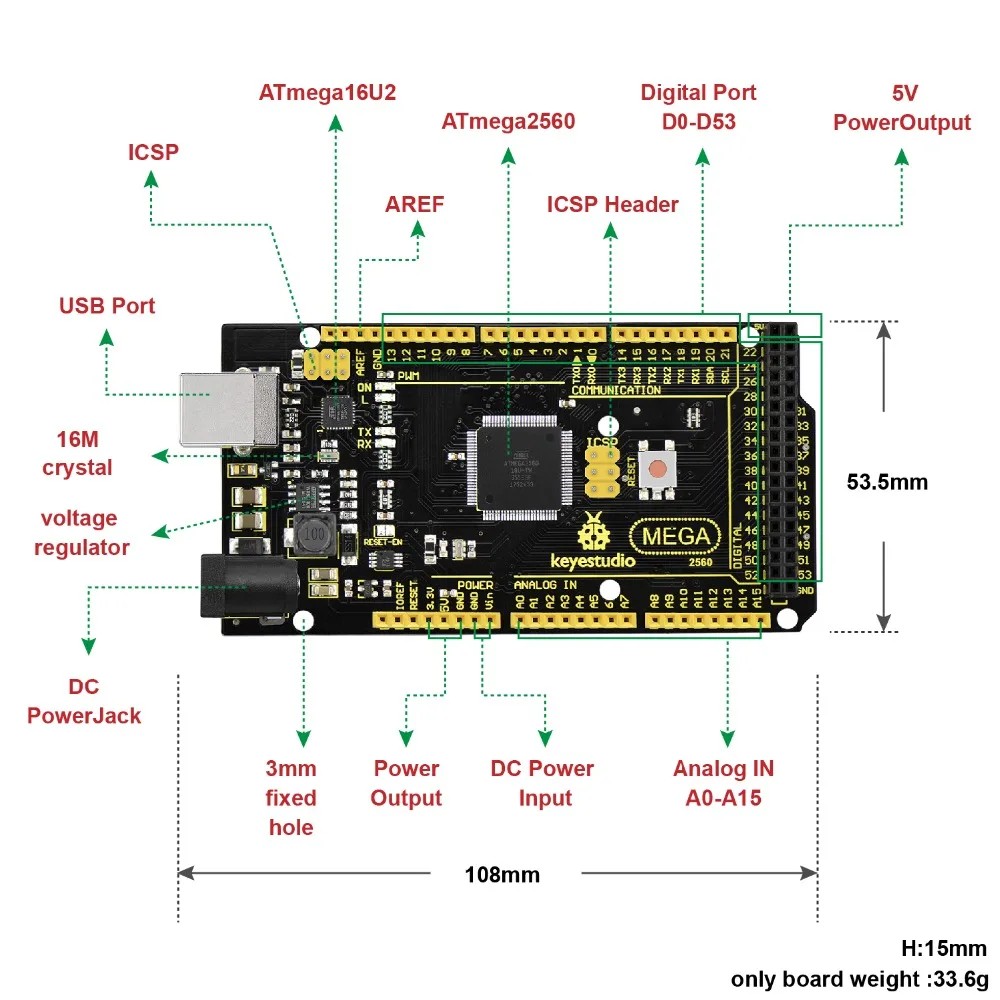
- Digital I/O: 54 pins, numbered D0 to D53
- PWM: 15 digital pins support PWM output
- Analog Inputs: 16 pins, A0 to A15
- UART0: RX0 (D0) / TX0 (D1)
- UART1: RX1 (D19) / TX1 (D18)
- UART2: RX2 (D17) / TX2 (D16)
- UART3: RX3 (D15) / TX3 (D14)
- I²C: SDA (D20) / SCL (D21)
- SPI: Available through the dedicated SPI pins / ICSP header
- Power: 5V, 3.3V, GND, VIN
Wiring
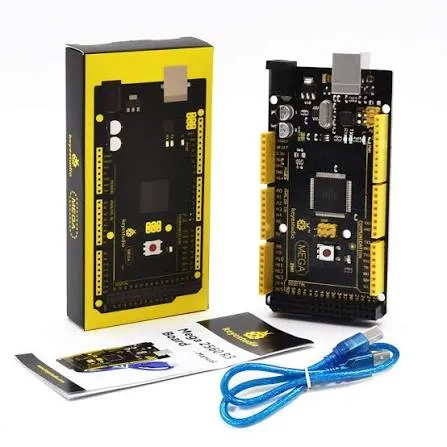
The MEGA 2560 can be connected to a computer using the included USB cable. The USB connection provides communication with the computer and allows programs to be uploaded using the Arduino IDE.
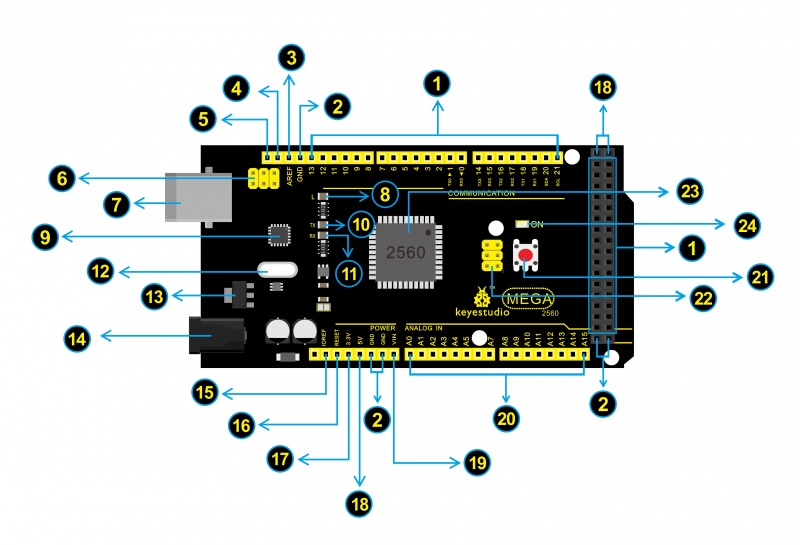
External sensors and modules can be connected directly to the appropriate digital, analog, serial, I²C, or SPI pins. When connecting external components, ensure that their operating voltage and current requirements are compatible with the board.
| Connection | MEGA 2560 Pin | Function |
|---|---|---|
| Digital Devices | D0–D53 | Digital input/output |
| Analog Sensors | A0–A15 | Analog input |
| I²C Devices | D20 / D21 | SDA / SCL |
| Serial 0 | D0 / D1 | RX0 / TX0 |
| Serial 1 | D19 / D18 | RX1 / TX1 |
| Serial 2 | D17 / D16 | RX2 / TX2 |
| Serial 3 | D15 / D14 | RX3 / TX3 |
Specifications
| Microcontroller | ATmega2560 |
|---|---|
| Operating Voltage | 5V |
| Recommended Input Voltage | 7–12V |
| Digital I/O Pins | 54 |
| PWM Pins | 15 |
| Analog Input Pins | 16 |
| Flash Memory | 256 KB (8 KB used by bootloader) |
| SRAM | 8 KB |
| EEPROM | 4 KB |
| Clock Speed | 16 MHz |
| Hardware Serial Ports | 4 UARTs |
| USB Interface | CH340 USB-to-Serial |
| USB Connector | USB |
| Board Compatibility | Arduino Mega 2560 compatible |
Resources
- Compatible with the Arduino IDE.
- The CH340 USB driver may need to be installed separately on some computers.
Features
- Based on the high-performance ATmega2560 microcontroller.
- 54 digital I/O pins for connecting sensors, modules, displays, motors, and other peripherals.
- 16 analog input pins for reading analog sensors and signals.
- 15 PWM-capable digital pins for motor speed, LED brightness, and other PWM applications.
- 4 hardware UART serial ports for connecting multiple serial devices simultaneously.
- 256 KB Flash memory for larger and more complex programs.
- Compatible with the Arduino IDE and standard Arduino libraries.
- Supports a wide range of Arduino Mega-compatible shields and modules.
- CH340 USB-to-Serial interface for programming and serial communication.
- 16 MHz operating clock for reliable microcontroller operation.
- Suitable for robotics, automation, IoT, education, prototyping, and embedded systems.
- Black and yellow PCB design.
Principle of Operation
The Keyestudio MEGA 2560 is controlled by the ATmega2560 microcontroller. Programs are written using the Arduino IDE and transferred to the board through the USB interface. Once programmed, the microcontroller executes the uploaded code and controls connected sensors, actuators, displays, communication modules, and other peripherals through its digital and analog I/O pins.
The board provides four independent hardware serial interfaces, allowing multiple UART-based devices to communicate with the microcontroller without relying on software-based serial communication. This makes the MEGA 2560 particularly useful for projects involving several communication modules at the same time.
Applications
- Robotics and robotic control systems
- Home and industrial automation prototypes
- IoT and connected embedded systems
- Multi-sensor monitoring systems
- Motor and actuator control
- LCD, TFT, OLED, and other display projects
- GPS, GSM, Bluetooth, and other serial communication projects
- Educational electronics and Arduino programming
- Embedded systems prototyping
- Projects requiring more I/O pins and memory than an Arduino UNO
Pinout
- Digital I/O: 54 pins, numbered D0 to D53
- PWM: 15 digital pins support PWM output
- Analog Inputs: 16 pins, A0 to A15
- UART0: RX0 (D0) / TX0 (D1)
- UART1: RX1 (D19) / TX1 (D18)
- UART2: RX2 (D17) / TX2 (D16)
- UART3: RX3 (D15) / TX3 (D14)
- I²C: SDA (D20) / SCL (D21)
- SPI: Available through the dedicated SPI pins / ICSP header
- Power: 5V, 3.3V, GND, VIN
Wiring
The MEGA 2560 can be connected to a computer using the included USB cable. The USB connection provides communication with the computer and allows programs to be uploaded using the Arduino IDE.
External sensors and modules can be connected directly to the appropriate digital, analog, serial, I²C, or SPI pins. When connecting external components, ensure that their operating voltage and current requirements are compatible with the board.
| Connection | MEGA 2560 Pin | Function |
|---|---|---|
| Digital Devices | D0–D53 | Digital input/output |
| Analog Sensors | A0–A15 | Analog input |
| I²C Devices | D20 / D21 | SDA / SCL |
| Serial 0 | D0 / D1 | RX0 / TX0 |
| Serial 1 | D19 / D18 | RX1 / TX1 |
| Serial 2 | D17 / D16 | RX2 / TX2 |
| Serial 3 | D15 / D14 | RX3 / TX3 |
Specifications
| Microcontroller | ATmega2560 |
|---|---|
| Operating Voltage | 5V |
| Recommended Input Voltage | 7–12V |
| Digital I/O Pins | 54 |
| PWM Pins | 15 |
| Analog Input Pins | 16 |
| Flash Memory | 256 KB (8 KB used by bootloader) |
| SRAM | 8 KB |
| EEPROM | 4 KB |
| Clock Speed | 16 MHz |
| Hardware Serial Ports | 4 UARTs |
| USB Interface | CH340 USB-to-Serial |
| USB Connector | USB |
| Board Compatibility | Arduino Mega 2560 compatible |
Resources
- Compatible with the Arduino IDE.
- The CH340 USB driver may need to be installed separately on some computers.