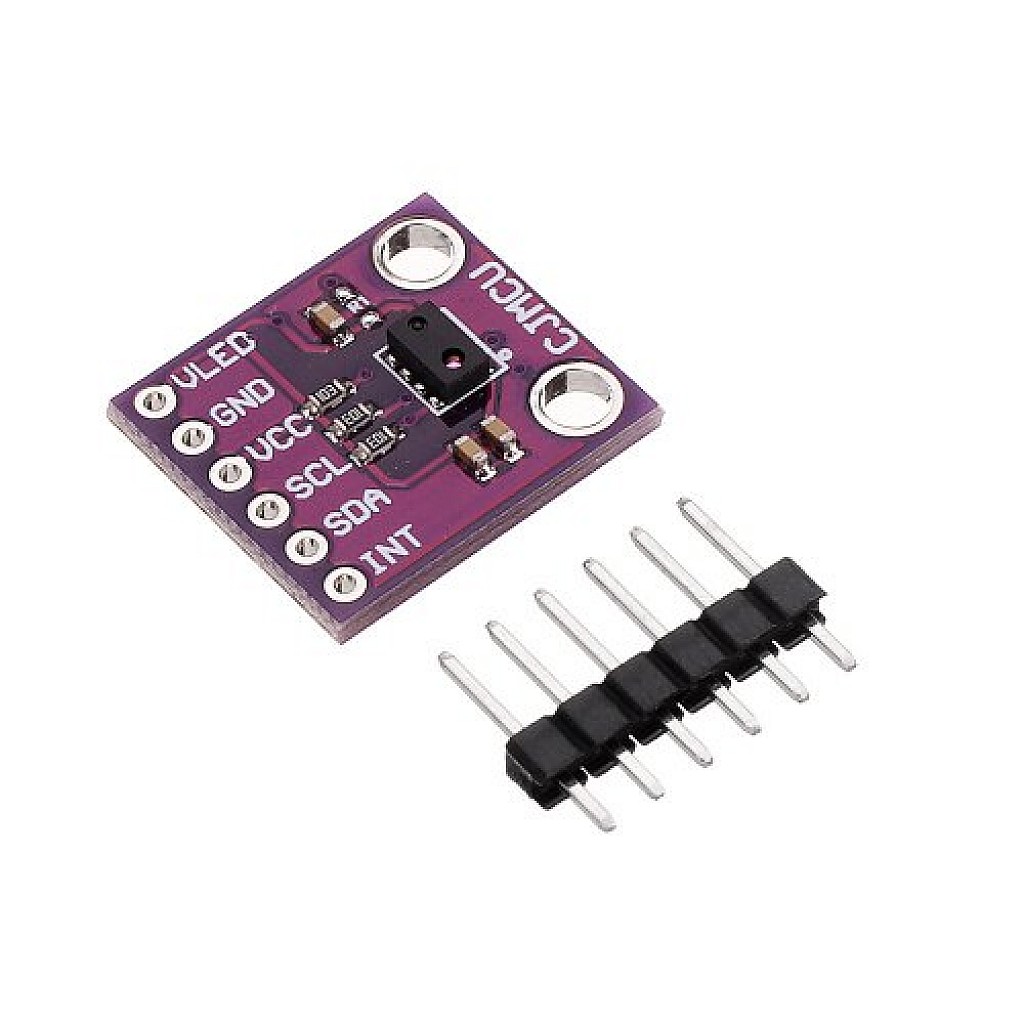
Features
- Integrated ambient light sensor proximity sensor and infrared LED
- Multiple gain levels with linear response across several dynamic ranges
- Designed for use under clear or darkened glass
- Near field proximity detection with configurable detection zones
- Ten bit proximity output and sixteen bit ambient light output
- Interrupt support for proximity ambient light or both
- Built in temperature compensation circuit
- High ambient light suppression and cross talk compensation
- I2C communication interface
- Compatible with Arduino and other microcontrollers
Specifications
- Supply voltage two point four to three point six volts
- Ambient light output resolution sixteen bit
- Proximity output resolution ten bit
- Operating temperature minus thirty to plus eighty degrees Celsius
- I2C address fixed at zero x one E
- Low power consumption with power down mode
Principle of Operation
The infrared LED emits infrared light which reflects from nearby objects. The proximity sensor measures the reflected signal strength to determine object presence and distance. At the same time the ambient light sensor continuously measures surrounding light levels. All measured data is processed internally and made available digitally through the I2C interface.
Pin Description
- GND ground connection
- VCC power supply between two point eight and three point eight volts
- SDA I2C data line
- SCL I2C clock line
- INT interrupt output active low
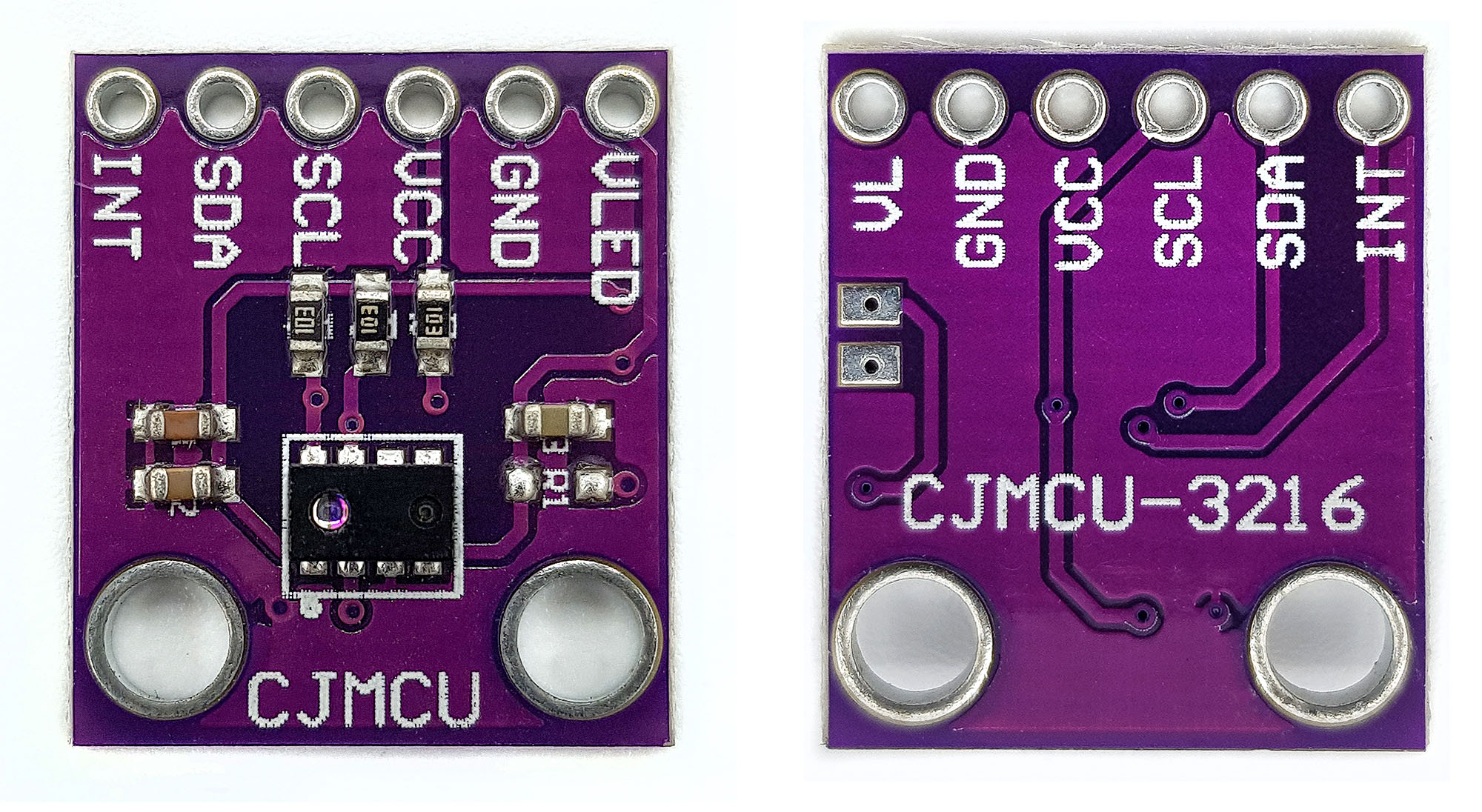
Typical Connections
- VCC to three point three volt supply
- GND to ground
- SDA to microcontroller I2C data pin
- SCL to microcontroller I2C clock pin
- INT to a digital interrupt pin
Applications
- Automatic screen brightness control
- Home automation presence detection
- Robotics obstacle detection
- Industrial object monitoring
- Security and access systems
- Consumer electronics gesture detection
Features
- Integrated ambient light sensor proximity sensor and infrared LED
- Multiple gain levels with linear response across several dynamic ranges
- Designed for use under clear or darkened glass
- Near field proximity detection with configurable detection zones
- Ten bit proximity output and sixteen bit ambient light output
- Interrupt support for proximity ambient light or both
- Built in temperature compensation circuit
- High ambient light suppression and cross talk compensation
- I2C communication interface
- Compatible with Arduino and other microcontrollers
Specifications
- Supply voltage two point four to three point six volts
- Ambient light output resolution sixteen bit
- Proximity output resolution ten bit
- Operating temperature minus thirty to plus eighty degrees Celsius
- I2C address fixed at zero x one E
- Low power consumption with power down mode
Principle of Operation
The infrared LED emits infrared light which reflects from nearby objects. The proximity sensor measures the reflected signal strength to determine object presence and distance. At the same time the ambient light sensor continuously measures surrounding light levels. All measured data is processed internally and made available digitally through the I2C interface.
Pin Description
- GND ground connection
- VCC power supply between two point eight and three point eight volts
- SDA I2C data line
- SCL I2C clock line
- INT interrupt output active low
Typical Connections
- VCC to three point three volt supply
- GND to ground
- SDA to microcontroller I2C data pin
- SCL to microcontroller I2C clock pin
- INT to a digital interrupt pin
Applications
- Automatic screen brightness control
- Home automation presence detection
- Robotics obstacle detection
- Industrial object monitoring
- Security and access systems
- Consumer electronics gesture detection