Skip to Content

Adapter Breakout For Arduino Atmega328 Atmega8 SMD AVR STM32 TQFP/QFP 32 0.8mm to DIP PCB (Per Piece)
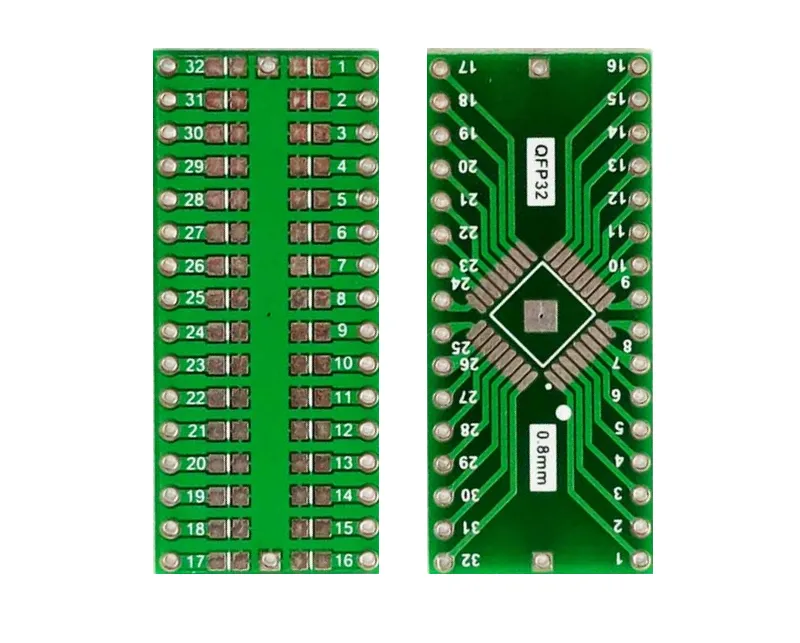
The Adapter Breakout for Arduino ATmega328, ATmega8, AVR, STM32 TQFP/QFP 32 (0.8mm) to DIP PCB provides a practical and reliable solution for interfacing surface-mount (SMT) components with through-hole (TH) prototyping boards. Designed specifically for 32-pin QFP/TQFP packages, this adapter allows fine-pitch SMT microcontrollers to be easily converted into a standard DIP format. Commonly used during the prototyping and development phase, this adapter board simplifies testing, modification, and debugging of circuits before mass production. It enables engineers, students, and hobbyists to work comfortably with SMT MCUs using breadboards or DIP sockets without the need for custom PCBs.

Package Includes

  • 1 × Adapter Breakout for Arduino ATmega328 / ATmega8 SMD AVR STM32 TQFP/QFP 32 0.8mm to DIP PCB


SMD PCB Breakout
15.75 AED 15.75 AED (Tax included)

Terms and Conditions
30-day money-back guarantee
Shipping: 2-3 Business Days

Features

  • Converts QFP/TQFP 32-pin SMT ICs to standard DIP format
  • Supports 0.8mm pitch SMT components
  • Ideal for prototyping, testing, and debugging
  • Allows use of SMT MCUs on breadboards and DIP sockets
  • Front side designed for precise QFP/TQFP soldering
  • Back side supports optional 0805 capacitors or resistors
  • Compact and reusable PCB design

Specifications

  • Product Type: SMT to Through-Hole Adapter Board
  • Supported Packages: QFP / TQFP 32-pin
  • Pitch: 0.8mm
  • Output Format: DIP
  • Compatible MCUs: ATmega8, ATmega328, AVR series, STM32 (32-pin)
  • Mounting Type: Surface mount to through-hole
  • PCB Type: Adapter breakout board

What Is It Used For

This SMT to DIP Adapter Breakout Board is used to convert surface-mount QFP/TQFP microcontrollers into a standard through-hole DIP format. It allows fine-pitch SMT ICs to be easily used on breadboards, prototyping boards, or DIP sockets without designing a custom PCB.

  • Prototyping: Test and evaluate SMT microcontrollers during the early stages of project development.
  • Breadboard Development: Enables the use of SMT ICs on standard 0.1-inch breadboards.
  • Circuit Debugging: Makes it easier to modify, measure, and troubleshoot circuits.
  • Educational Projects: Ideal for students and learners working with SMT devices.
  • Pre-Production Testing: Useful for validating designs before final PCB manufacturing.