- All products
- Kits
- Robotic Kits
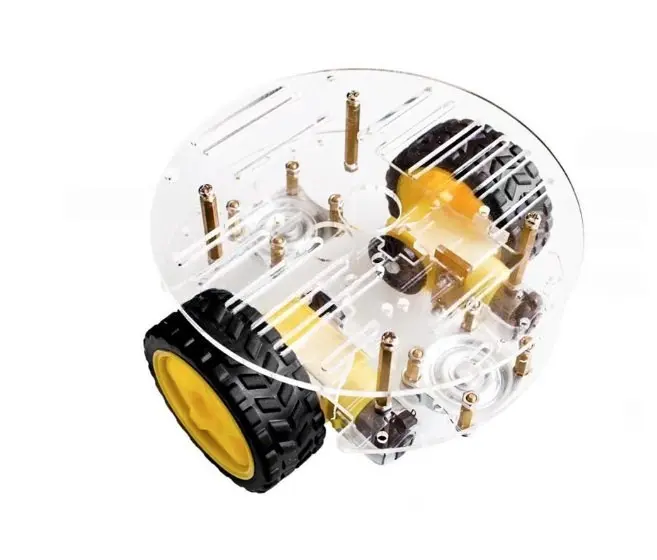
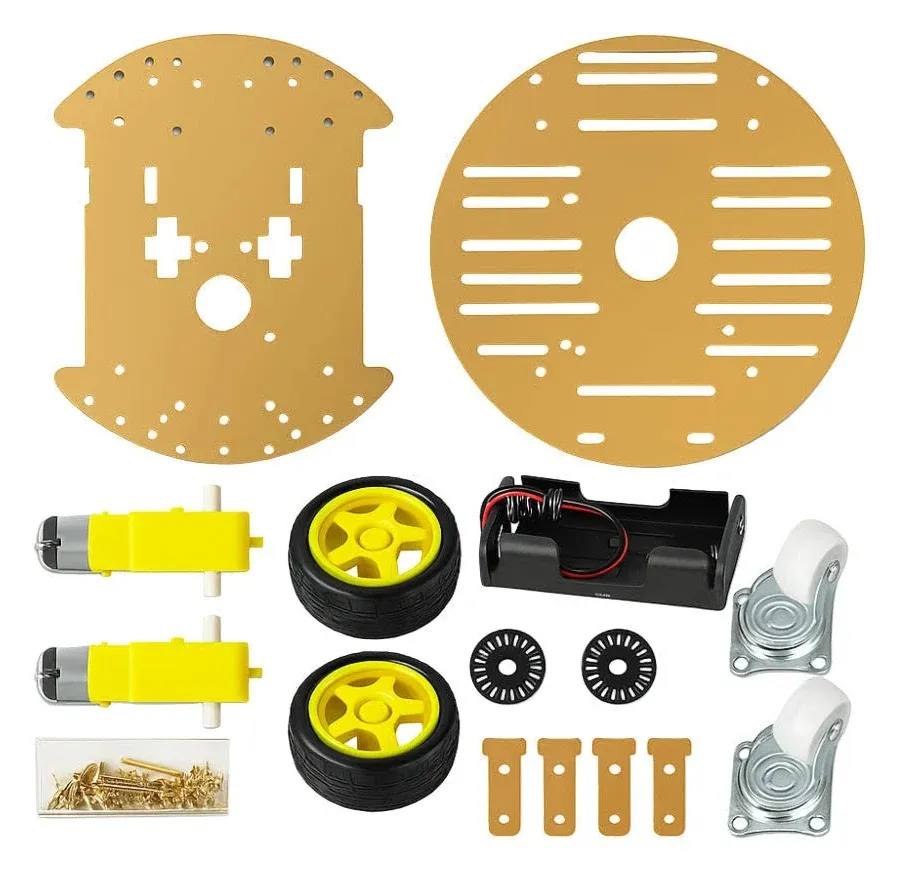
- Robot 2 Wheel Drive Circular Smart Car chassis Kit For Arduino
- Robotic Kits
Because of its modular design, the chassis can easily integrate with sensors such as ultrasonic distance sensors, infrared line tracking sensors, Bluetooth or WiFi communication modules, and cameras. This makes it an excellent platform for students, hobbyists, and engineers experimenting with robotics and embedded systems.
Features
- Two-layer robot chassis design for flexible component mounting
- Two wheel drive system with geared motors
- Compatible with Arduino, ESP32, Raspberry Pi, and other controllers
- Rubber tires for improved traction and stability
- Supports encoder feedback for motion control
- Expandable with sensors, cameras, and wireless modules
- Compact and lightweight design for mobile robotics
- Suitable for educational robotics and DIY projects
Specifications
- Chassis Structure: Two-layer stable frame
- Drive Type: Two wheel drive (2WD)
- Motors: DC geared motors with encoder support
- Motor Voltage Range: DC 3 V to 6 V
- Motor Current: 100 mA to 120 mA
- Gear Reduction Ratio: 48:1
- Motor Speed: 100 to 240 RPM (with wheel)
- Car Speed: 20 to 48 meters per minute
- Wheel Diameter: 65 mm
- Wheel Width: 26 mm
- Wheel Center Hole: 5.3 mm × 3.66 mm
- Motor Dimensions: 70 mm × 22 mm × 18 mm
- Motor Weight: 29 g (each)
- Noise Level: Less than 65 dB
Applications
- Line following robots
- Obstacle avoidance robots
- Autonomous vehicle experiments
- Wireless remote control robots
- Educational robotics platforms
- Robotics prototyping and research
How to Use
- Assemble the two chassis layers using the provided screws and mounting parts.
- Attach the geared motors to the chassis frame.
- Install the wheels on the motor shafts.
- Mount the caster wheels to provide balance and smooth movement.
- Install a motor driver module such as L298N or L293D.
- Connect the motor driver to a microcontroller such as Arduino.
- Mount sensors like ultrasonic sensors or line tracking modules on the top layer.
- Upload a program to control the robot movement and sensor behavior.
Because of its modular design, the chassis can easily integrate with sensors such as ultrasonic distance sensors, infrared line tracking sensors, Bluetooth or WiFi communication modules, and cameras. This makes it an excellent platform for students, hobbyists, and engineers experimenting with robotics and embedded systems.
Features
- Two-layer robot chassis design for flexible component mounting
- Two wheel drive system with geared motors
- Compatible with Arduino, ESP32, Raspberry Pi, and other controllers
- Rubber tires for improved traction and stability
- Supports encoder feedback for motion control
- Expandable with sensors, cameras, and wireless modules
- Compact and lightweight design for mobile robotics
- Suitable for educational robotics and DIY projects
Specifications
- Chassis Structure: Two-layer stable frame
- Drive Type: Two wheel drive (2WD)
- Motors: DC geared motors with encoder support
- Motor Voltage Range: DC 3 V to 6 V
- Motor Current: 100 mA to 120 mA
- Gear Reduction Ratio: 48:1
- Motor Speed: 100 to 240 RPM (with wheel)
- Car Speed: 20 to 48 meters per minute
- Wheel Diameter: 65 mm
- Wheel Width: 26 mm
- Wheel Center Hole: 5.3 mm × 3.66 mm
- Motor Dimensions: 70 mm × 22 mm × 18 mm
- Motor Weight: 29 g (each)
- Noise Level: Less than 65 dB
Applications
- Line following robots
- Obstacle avoidance robots
- Autonomous vehicle experiments
- Wireless remote control robots
- Educational robotics platforms
- Robotics prototyping and research
How to Use
- Assemble the two chassis layers using the provided screws and mounting parts.
- Attach the geared motors to the chassis frame.
- Install the wheels on the motor shafts.
- Mount the caster wheels to provide balance and smooth movement.
- Install a motor driver module such as L298N or L293D.
- Connect the motor driver to a microcontroller such as Arduino.
- Mount sensors like ultrasonic sensors or line tracking modules on the top layer.
- Upload a program to control the robot movement and sensor behavior.