Features:
- Powered by ARM® Cortex®-M4F processor optimized for ultra-low power operation
- Supports Bluetooth 5, Bluetooth Mesh, Thread, IEEE 802.15.4, ANT, and proprietary 2.4 GHz protocols
- Integrated NFC-A tag for Near Field Communication applications
- Built-in USB 2.0 Full-Speed controller for connectivity
- ARM TrustZone® Cryptocell 310 security subsystem for enhanced security
- 1 MB FLASH memory and 256 KB RAM
- Integrated DAPLink debugger for drag-and-drop programming and CMSIS-DAP debugging
- USB Virtual COM port for logging and communication
- Microchip 2-Port USB 2.0 Hi-Speed hub controller
- External ultra-low-power 64-Mb QSPI FLASH memory
- Up to 24 GPIOs accessible via headers
- Programmable user button and RGB LED
- IF Boot/Reset button for easy control
- Onboard 2.4 GHz antenna with optional U.FL connector for external antenna
- 3.3V regulator with up to 1A peak current output
- VBUS & VIN power-path management
- Reversible USB Type-C connector
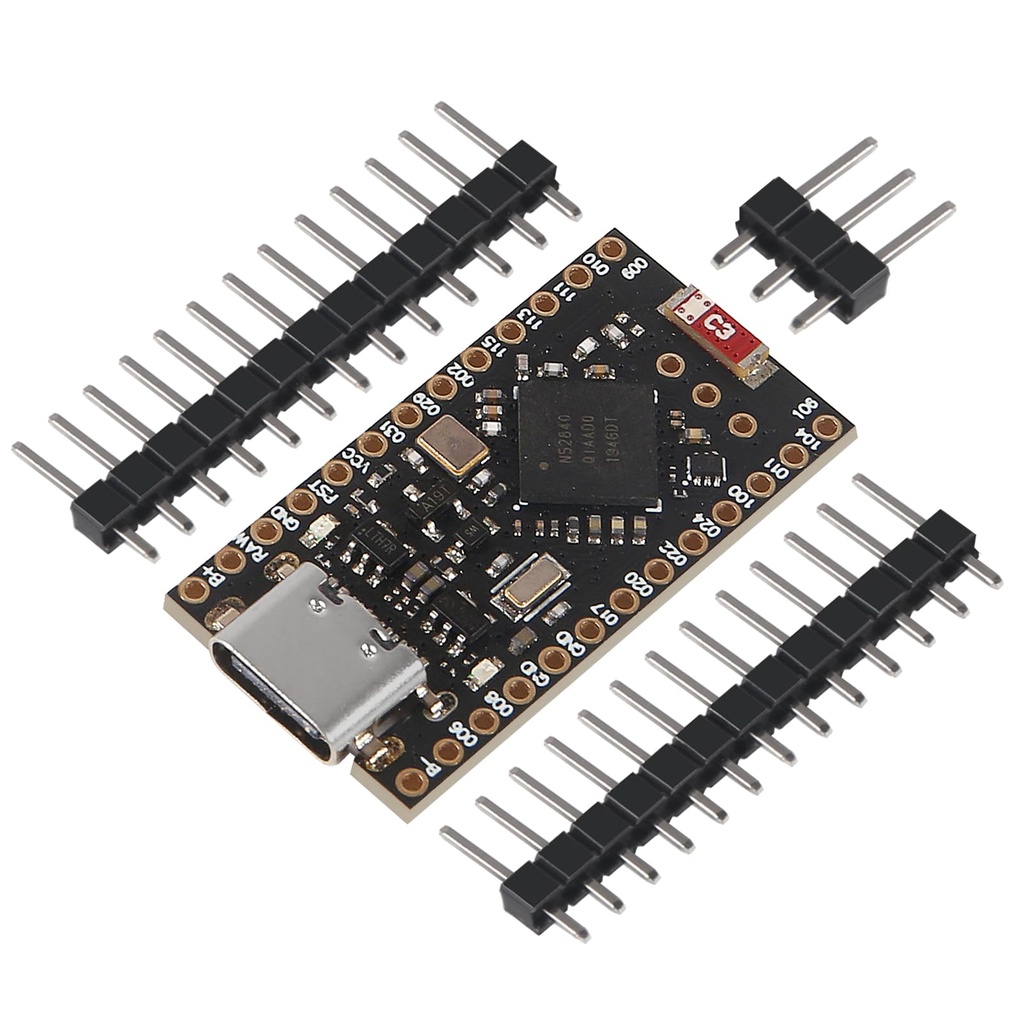
- Breadboard-friendly design with dual 18-pin headers
Physical Details:
- Compact development board with breadboard-friendly layout
- Dimensions: 50 mm x 23 mm x 13 mm
- Weight: Approximately 36 g
- Dual 18-pin headers for easy expansion
Principle of Work:
The nRF52840-MDK operates using the ARM Cortex-M4F CPU, which executes user programs stored in internal FLASH memory, while RAM is used for runtime data processing. The integrated DAPLink interface simplifies development by enabling direct USB programming, debugging, and serial communication. The onboard USB hub controller ensures seamless handling of both debugging and USB device communication simultaneously. Wireless communication is achieved through the integrated 2.4 GHz radio, supporting multiple protocols concurrently. Developers can interact with the system using onboard GPIOs, buttons, and RGB LED, while optional external antennas enhance signal performance for advanced applications.
Pinout of the Module:

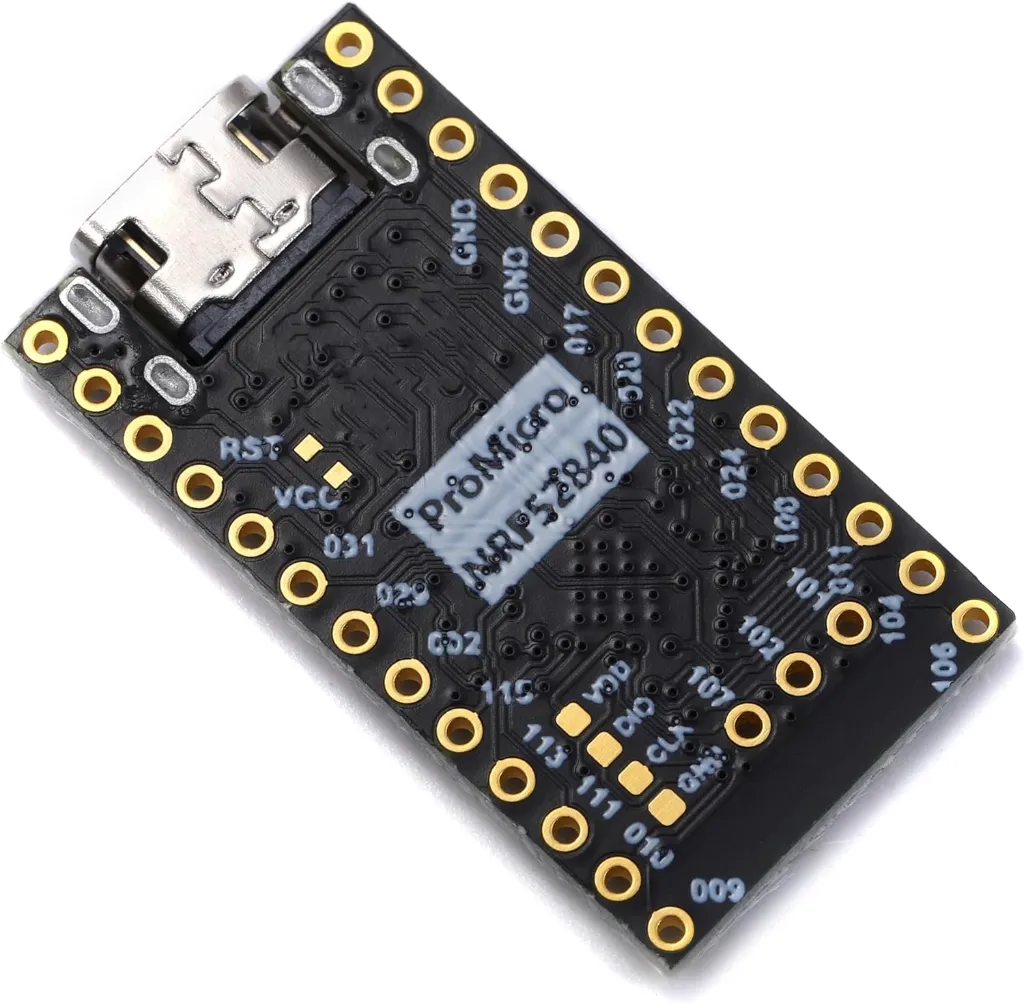
- Dual 18-pin Headers: Provide access to up to 24 GPIOs
- User Button: Programmable input for custom control
- RGB LED: Programmable output for status indication
- IF Boot/Reset Button: Used for resetting or boot mode
- USB Type-C Port: Power supply and communication interface
- U.FL Connector: External antenna connection option
Applications:
- Bluetooth Low Energy (BLE) and Mesh networking development
- Thread and Zigbee IoT systems
- Multi-protocol wireless experimentation
- IoT gateway and USB-connected devices
- Wireless security and authentication solutions
- Embedded debugging and firmware development
- Rapid prototyping of connected devices
Technical Details:
- Wireless: Bluetooth 5, Mesh, Thread, Zigbee, IEEE 802.15.4, ANT, 2.4 GHz proprietary
- Flash Memory: 1 MB
- RAM: 256 KB
- External Memory: 64-Mb QSPI FLASH
- USB: 2.0 Full-Speed with USB Type-C connector
- Security: ARM TrustZone Cryptocell 310
- GPIO: Up to 24 pins
- Interfaces: DAPLink, CMSIS-DAP, Virtual COM Port
- Antenna: Onboard chip antenna + U.FL connector
- Power Supply: 3.3V regulator (1A peak), VBUS & VIN management
- Dimensions: 50 x 23 x 13 mm
- Weight: 36 g
Resources:
Comparisons:
The nRF52840-MDK and nRF52840 USB Dongle both utilize the same :contentReference[oaicite:4]{index=4}, but differ in design and usage:
- Form Factor: MDK is a full development board with headers; the USB Dongle is ultra-compact.
- GPIO Access: MDK provides up to 24 GPIOs; the dongle offers limited pin access.
- Debugging: MDK includes integrated DAPLink debugger; dongle requires external tools for advanced debugging.
- Connectivity: Both support the same wireless protocols.
- Use Case: MDK is ideal for prototyping and development; the dongle suits compact USB-based applications and testing.
Features:
- Powered by ARM® Cortex®-M4F processor optimized for ultra-low power operation
- Supports Bluetooth 5, Bluetooth Mesh, Thread, IEEE 802.15.4, ANT, and proprietary 2.4 GHz protocols
- Integrated NFC-A tag for Near Field Communication applications
- Built-in USB 2.0 Full-Speed controller for connectivity
- ARM TrustZone® Cryptocell 310 security subsystem for enhanced security
- 1 MB FLASH memory and 256 KB RAM
- Integrated DAPLink debugger for drag-and-drop programming and CMSIS-DAP debugging
- USB Virtual COM port for logging and communication
- Microchip 2-Port USB 2.0 Hi-Speed hub controller
- External ultra-low-power 64-Mb QSPI FLASH memory
- Up to 24 GPIOs accessible via headers
- Programmable user button and RGB LED
- IF Boot/Reset button for easy control
- Onboard 2.4 GHz antenna with optional U.FL connector for external antenna
- 3.3V regulator with up to 1A peak current output
- VBUS & VIN power-path management
- Reversible USB Type-C connector
- Breadboard-friendly design with dual 18-pin headers
Physical Details:
- Compact development board with breadboard-friendly layout
- Dimensions: 50 mm x 23 mm x 13 mm
- Weight: Approximately 36 g
- Dual 18-pin headers for easy expansion
Principle of Work:
The nRF52840-MDK operates using the ARM Cortex-M4F CPU, which executes user programs stored in internal FLASH memory, while RAM is used for runtime data processing. The integrated DAPLink interface simplifies development by enabling direct USB programming, debugging, and serial communication. The onboard USB hub controller ensures seamless handling of both debugging and USB device communication simultaneously. Wireless communication is achieved through the integrated 2.4 GHz radio, supporting multiple protocols concurrently. Developers can interact with the system using onboard GPIOs, buttons, and RGB LED, while optional external antennas enhance signal performance for advanced applications.
Pinout of the Module:
- Dual 18-pin Headers: Provide access to up to 24 GPIOs
- User Button: Programmable input for custom control
- RGB LED: Programmable output for status indication
- IF Boot/Reset Button: Used for resetting or boot mode
- USB Type-C Port: Power supply and communication interface
- U.FL Connector: External antenna connection option
Applications:
- Bluetooth Low Energy (BLE) and Mesh networking development
- Thread and Zigbee IoT systems
- Multi-protocol wireless experimentation
- IoT gateway and USB-connected devices
- Wireless security and authentication solutions
- Embedded debugging and firmware development
- Rapid prototyping of connected devices
Technical Details:
- Wireless: Bluetooth 5, Mesh, Thread, Zigbee, IEEE 802.15.4, ANT, 2.4 GHz proprietary
- Flash Memory: 1 MB
- RAM: 256 KB
- External Memory: 64-Mb QSPI FLASH
- USB: 2.0 Full-Speed with USB Type-C connector
- Security: ARM TrustZone Cryptocell 310
- GPIO: Up to 24 pins
- Interfaces: DAPLink, CMSIS-DAP, Virtual COM Port
- Antenna: Onboard chip antenna + U.FL connector
- Power Supply: 3.3V regulator (1A peak), VBUS & VIN management
- Dimensions: 50 x 23 x 13 mm
- Weight: 36 g
Resources:
Comparisons:
The nRF52840-MDK and nRF52840 USB Dongle both utilize the same :contentReference[oaicite:4]{index=4}, but differ in design and usage:
- Form Factor: MDK is a full development board with headers; the USB Dongle is ultra-compact.
- GPIO Access: MDK provides up to 24 GPIOs; the dongle offers limited pin access.
- Debugging: MDK includes integrated DAPLink debugger; dongle requires external tools for advanced debugging.
- Connectivity: Both support the same wireless protocols.
- Use Case: MDK is ideal for prototyping and development; the dongle suits compact USB-based applications and testing.