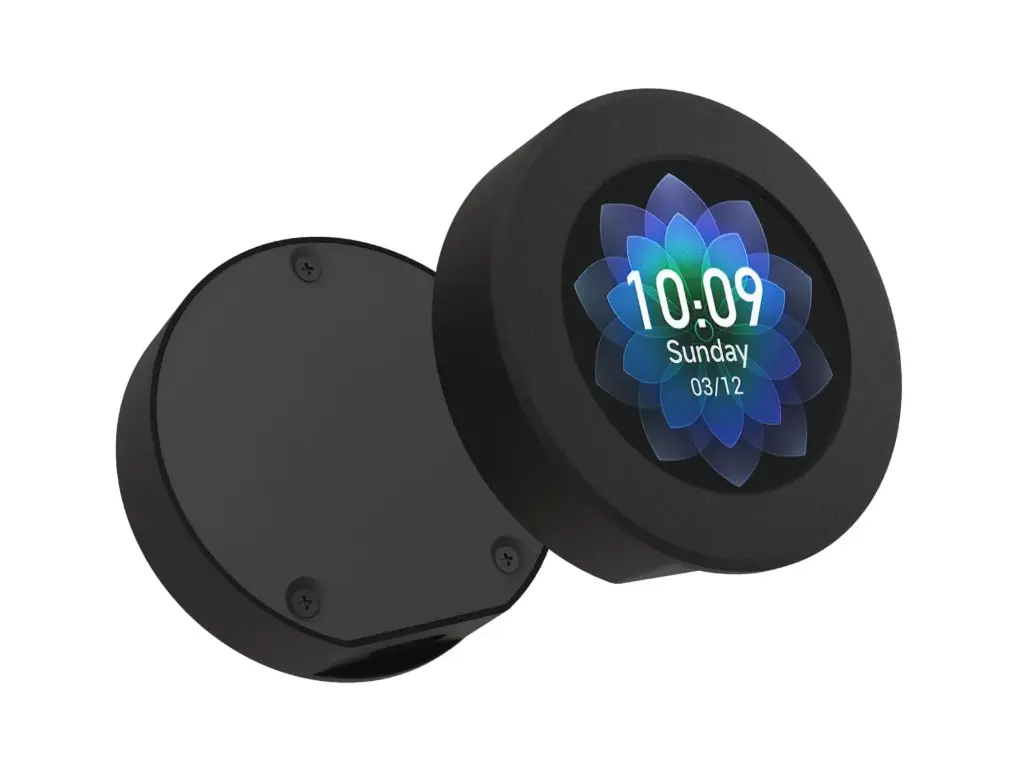
Features:
- Processor: Xtensa® 32-bit LX7 dual-core, up to 240MHz
- Wireless: 2.4GHz Wi-Fi (802.11 b/g/n) and Bluetooth® 5 (LE)
- Memory: 512KB SRAM, 384KB ROM, 2MB PSRAM, 16MB Flash
- Display: 1.28-inch capacitive touch, 240×240 resolution, 65K color
- Sensors: QMI8658 6-axis IMU (3-axis accelerometer, 3-axis gyroscope)
- Battery Management: 3.7V MX1.25 lithium battery charging header
- Interfaces: Type-C connector, 6 GPIO pins via SH1.0 connector
- Additional Features: Flexible clock, low power consumption, USB serial port controller, GPIO pin configuration
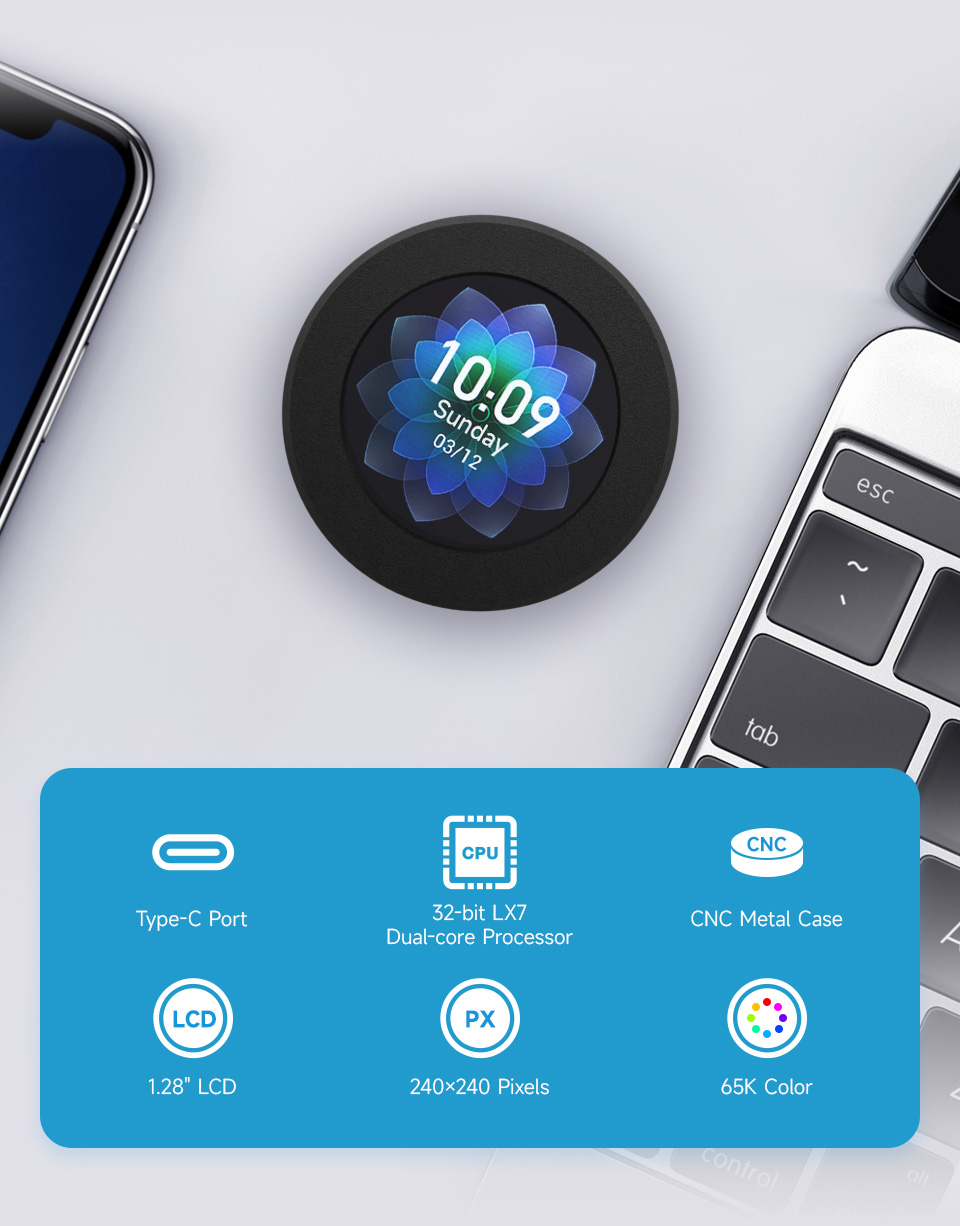
Specifications:
LCD Parameters:
- Touch Chip: CST816S
- Touch Interface: I2C
- Display Chip: GC9A01A
- Display Interface: SPI
- Resolution: 240(H)RGB x 240(V)
- Display Size: Φ32.4mm
- Panel Type: IPS
- Pixel Size: 0.135(H) x 0.135(V) mm
IMU Parameters:
- Sensor: QMI8658
- Acceleration: 16-bit resolution, Range: ±2, ±4, ±8, ±16g
- Gyrometer: 16-bit resolution, Range: ±16, ±32, ±64, ±128, ±256, ±512, ±1024, ±2048°/sec
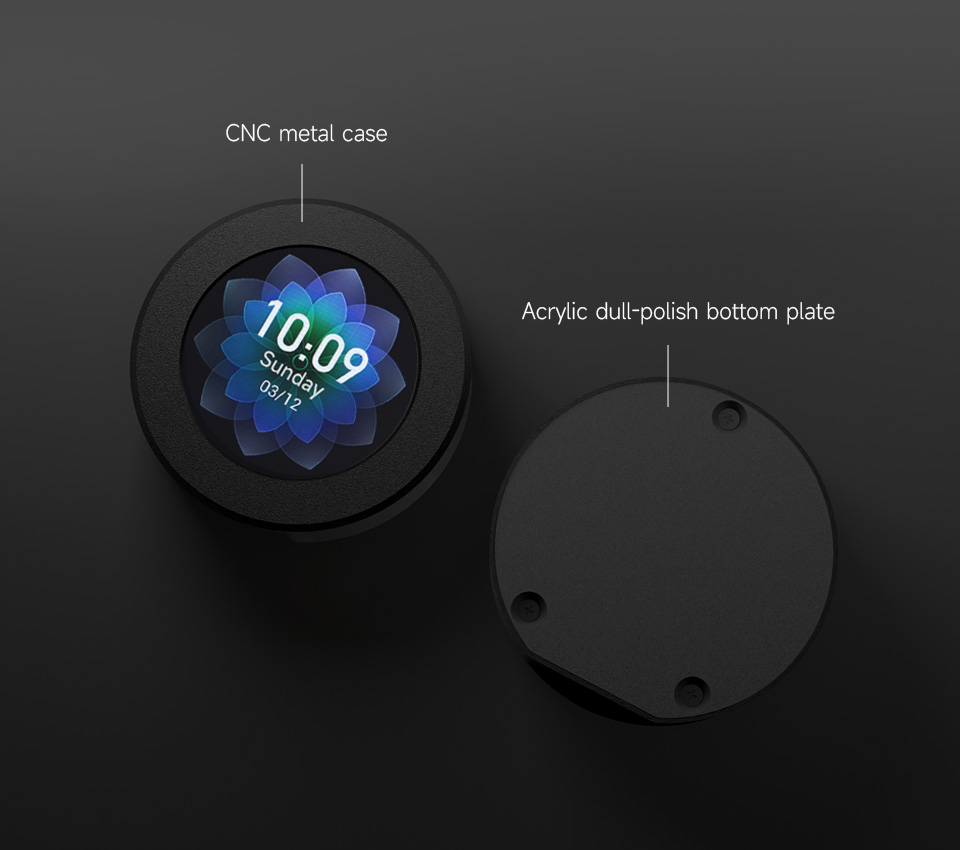
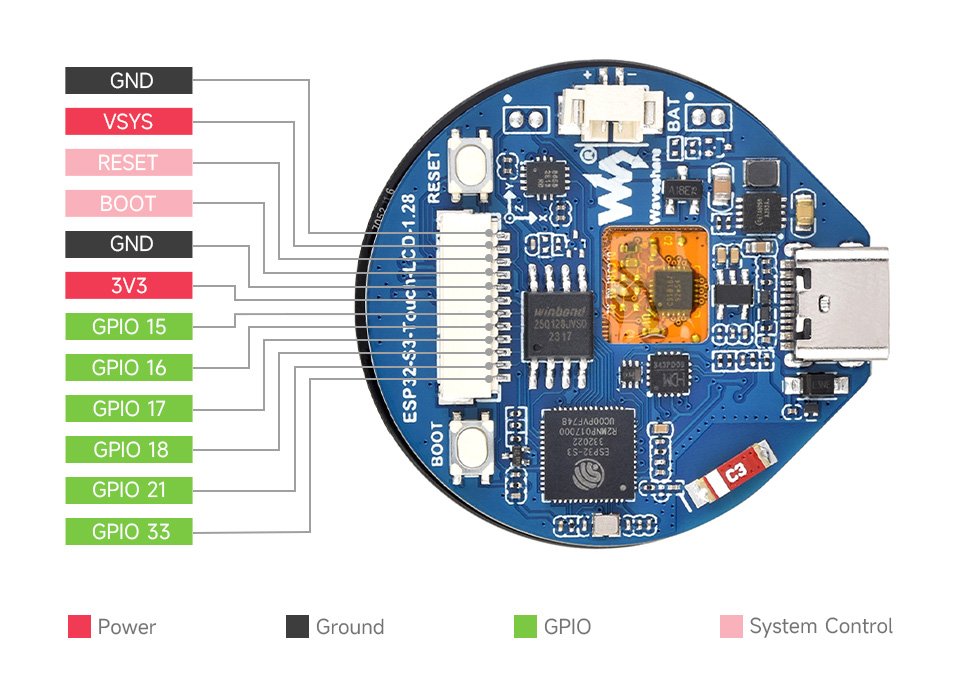
Pinout:
| ID | Component | Description |
|---|---|---|
| 1 | ESP32-S3R2 | The SoC with WiFi and Bluetooth, up to 240MHz operating frequency, with onboard 2MB PSRAM. |
| 2 | W25Q128JVSIQ | 16MB NOR-Flash. |
| 3 | QMI8658 | 6-axis IMU includes a 3-axis gyroscope and a 3-axis accelerometer. |
| 4 | ME6217C33M5G | 800mA output, low dropout, high rejection rate voltage regulator. |
| 5 | CH343P | USB to UART chip. |
| 6 | ETA6096 | High-efficiency Lithium battery recharge manager. |
| 7 | 1.27mm pitch headers | Adapting multiple GPIO pins. |
| 8 | BOOT button | Press it before resetting to enter download mode. |
| 9 | RESET button | Button to reset the device. |
| 10 | MX1.25 battery header | MX1.25 2P connector, for 3.7V Lithium battery, supports charging and discharging. |
| 11 | USB Type-C connector | For programming and log printing. |
| 12 | 2.4GHz ceramic antenna | Onboard antenna for 2.4GHz communication. |
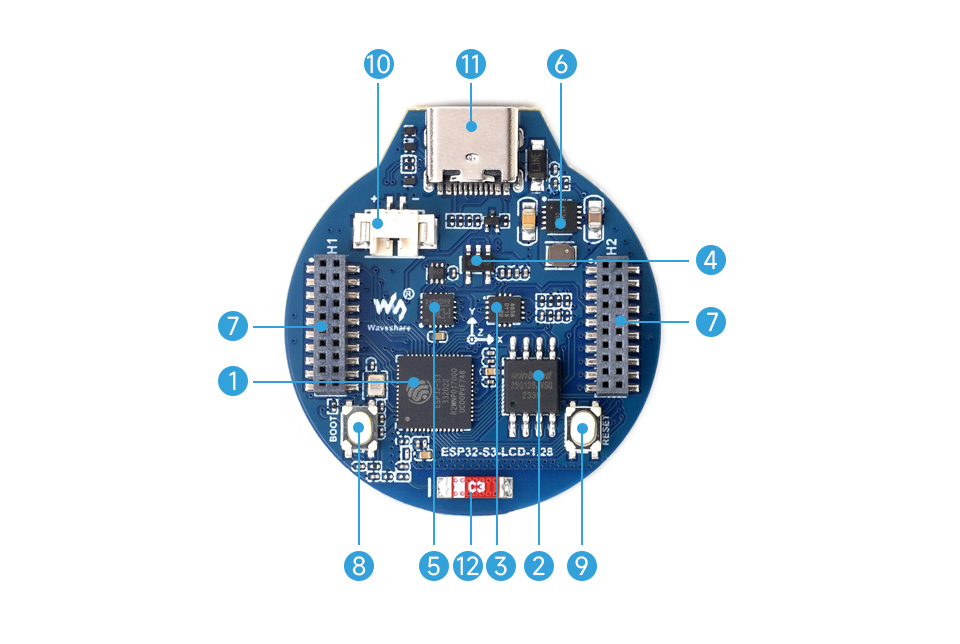
| Pin | Peripheral | Description |
|---|---|---|
| GPIO0 | BOOT0 | Boot mode pin. Used to enter firmware download mode when held low during reset. |
| GPIO13 | TP_RST | Reset line for the touch panel. |
| GPIO14 | LCD_RST | Reset line for the LCD screen. |
| GPIO15 | GPIO | General Purpose Input/Output pin, can be configured for various functions. |
| GPIO16 | GPIO | General Purpose Input/Output pin, can be configured for various functions. |
| GPIO17 | GPIO | General Purpose Input/Output pin, can be configured for various functions. |
| GPIO18 | GPIO | General Purpose Input/Output pin, can be configured for various functions. |
| GPIO21 | GPIO | General Purpose Input/Output pin, can be configured for various functions. |
| GPIO33 | GPIO | General Purpose Input/Output pin, can be configured for various functions. |
| UART_TXD | UART | Transmit data pin for UART communication, used for firmware burning and log printing. |
| UART_RXD | UART | Receive data pin for UART communication, used for firmware burning and log printing. |
Applications
- IoT Devices
- Mobile Devices
- Wearable Electronics
- Smart Home Applications
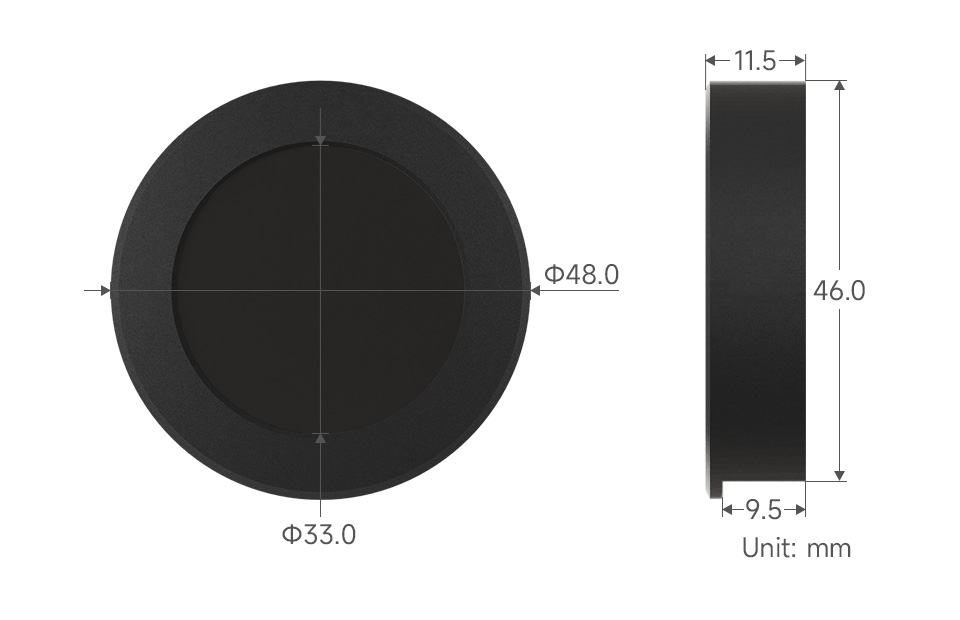
Dimensions
Features:
- Processor: Xtensa® 32-bit LX7 dual-core, up to 240MHz
- Wireless: 2.4GHz Wi-Fi (802.11 b/g/n) and Bluetooth® 5 (LE)
- Memory: 512KB SRAM, 384KB ROM, 2MB PSRAM, 16MB Flash
- Display: 1.28-inch capacitive touch, 240×240 resolution, 65K color
- Sensors: QMI8658 6-axis IMU (3-axis accelerometer, 3-axis gyroscope)
- Battery Management: 3.7V MX1.25 lithium battery charging header
- Interfaces: Type-C connector, 6 GPIO pins via SH1.0 connector
- Additional Features: Flexible clock, low power consumption, USB serial port controller, GPIO pin configuration
Specifications:
LCD Parameters:
- Touch Chip: CST816S
- Touch Interface: I2C
- Display Chip: GC9A01A
- Display Interface: SPI
- Resolution: 240(H)RGB x 240(V)
- Display Size: Φ32.4mm
- Panel Type: IPS
- Pixel Size: 0.135(H) x 0.135(V) mm
IMU Parameters:
- Sensor: QMI8658
- Acceleration: 16-bit resolution, Range: ±2, ±4, ±8, ±16g
- Gyrometer: 16-bit resolution, Range: ±16, ±32, ±64, ±128, ±256, ±512, ±1024, ±2048°/sec
Pinout:
| ID | Component | Description |
|---|---|---|
| 1 | ESP32-S3R2 | The SoC with WiFi and Bluetooth, up to 240MHz operating frequency, with onboard 2MB PSRAM. |
| 2 | W25Q128JVSIQ | 16MB NOR-Flash. |
| 3 | QMI8658 | 6-axis IMU includes a 3-axis gyroscope and a 3-axis accelerometer. |
| 4 | ME6217C33M5G | 800mA output, low dropout, high rejection rate voltage regulator. |
| 5 | CH343P | USB to UART chip. |
| 6 | ETA6096 | High-efficiency Lithium battery recharge manager. |
| 7 | 1.27mm pitch headers | Adapting multiple GPIO pins. |
| 8 | BOOT button | Press it before resetting to enter download mode. |
| 9 | RESET button | Button to reset the device. |
| 10 | MX1.25 battery header | MX1.25 2P connector, for 3.7V Lithium battery, supports charging and discharging. |
| 11 | USB Type-C connector | For programming and log printing. |
| 12 | 2.4GHz ceramic antenna | Onboard antenna for 2.4GHz communication. |
| Pin | Peripheral | Description |
|---|---|---|
| GPIO0 | BOOT0 | Boot mode pin. Used to enter firmware download mode when held low during reset. |
| GPIO13 | TP_RST | Reset line for the touch panel. |
| GPIO14 | LCD_RST | Reset line for the LCD screen. |
| GPIO15 | GPIO | General Purpose Input/Output pin, can be configured for various functions. |
| GPIO16 | GPIO | General Purpose Input/Output pin, can be configured for various functions. |
| GPIO17 | GPIO | General Purpose Input/Output pin, can be configured for various functions. |
| GPIO18 | GPIO | General Purpose Input/Output pin, can be configured for various functions. |
| GPIO21 | GPIO | General Purpose Input/Output pin, can be configured for various functions. |
| GPIO33 | GPIO | General Purpose Input/Output pin, can be configured for various functions. |
| UART_TXD | UART | Transmit data pin for UART communication, used for firmware burning and log printing. |
| UART_RXD | UART | Receive data pin for UART communication, used for firmware burning and log printing. |
Applications
- IoT Devices
- Mobile Devices
- Wearable Electronics
- Smart Home Applications
Dimensions