Features:
- 8 Channels: Simultaneous monitoring of multiple digital signals
- Large Sample Buffer: 256 kSamples recording size
- High Sampling Rate: 20 MHz standard, up to 60 MHz (overclocked)
- No Performance Trade-offs: Full sampling capacity regardless of channel count or speed
- Trigger System: Simple configurable edge detection (OR trigger)
- Pre/Post Trigger Capture: Adjustable ratio using rolling buffer
- 5V Tolerant Inputs: LOW < 0.8V, HIGH > 2.0V
- Fast Data Transfer: ~500 kB/s (256 kSamples in ~0.5 seconds)
- Real-Time Control: Capture can be stopped anytime from host software
- Cross-Platform Support: Compatible with Windows, macOS, and Linux
- DIY Friendly Design: Uses 0603 and SOIC components on a 2-layer PCB
- Onboard Power Output: 3.3V regulator up to 400 mA
- Compact Size: 3cm x 3cm PCB
- USB Bootloader: Easy firmware updates via USB
- Expandable: Supports probe cables and acrylic case
- Open Source: PCB (EAGLE) and firmware available
Principle of Work:
The Logic Pirate captures digital signals by sampling input channels at high speed and storing the data in onboard serial SRAM memory. When a trigger condition is met, the device records both pre-trigger and post-trigger data, ensuring accurate capture of signal events.
The data is then transferred to a host computer via USB, where it is analyzed using compatible software. This enables decoding of communication protocols, timing analysis, and debugging of digital systems.
The device uses a PIC32 microcontroller to manage communication and memory operations, while serial SRAM chips store captured samples. Flexible clocking allows a wide range of sampling rates from kHz to MHz levels.
Pinout of the Module:


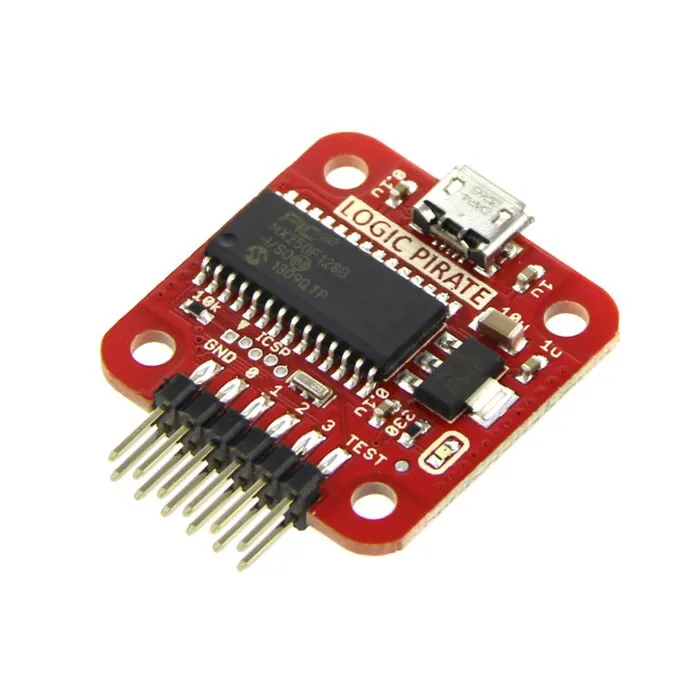
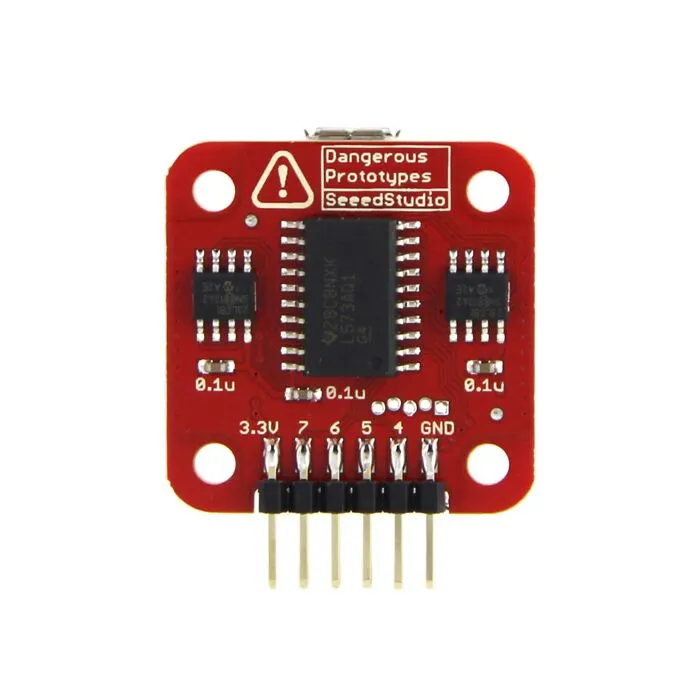
- CH0–CH7: Digital input channels
- GND: Common ground reference
- 3.3V: Power output for external circuits
- USB: Power, communication, and firmware update interface
Applications:
- Protocol Analysis: UART, SPI, I2C, JTAG, 1-Wire, and more
- Embedded Debugging: Monitoring microcontroller signals
- Electronics Testing: Signal timing and logic validation
- Reverse Engineering: Analyzing unknown communication
- Educational Use: Learning digital signal processing
- DIY Development: Debugging custom hardware projects
Circuit:

Connect the target signals to CH0–CH7 and ensure a shared ground between the Logic Pirate and the circuit under test. The device is powered via USB and communicates directly with the host PC.
Connecting with Software First Time
- Connect Device: Plug into PC via USB
- Install Software: Use SUMP-compatible client (e.g., Logic Sniffer)
- Select Port: Choose the correct COM port
- Configure Capture: Set sampling rate, trigger, and channels
- Start Capture: Analyze captured signals in real-time
Host Software Features:
- Up to 10 movable cursors for precise measurements
- Automatic calculation of period, frequency, and duty cycle
- Display signals as HEX values or analog-style waveforms
- Built-in protocol analyzers (UART, SPI, I2C, JTAG, 1-Wire, etc.)
About Overclocking:
The Logic Pirate uses serial SRAM rated at 20MHz and a PIC32 MCU rated at 40MHz. However, both can be safely overclocked under typical conditions to achieve higher sampling rates.
- SRAM Overclocking: Tested up to ~80MHz under normal conditions
- PIC32 Overclocking: Can operate up to ~60MHz with alternative firmware
- Selectable Sample Rates: From 2 kHz up to 60 MHz depending on firmware
Note: Overclocking is possible but not guaranteed and is done at the user’s own risk.
Bootloader:

The built-in USB bootloader allows easy firmware updates and switching between standard (40MHz) and overclocked (60MHz) modes. It automatically runs on startup and enters update mode when triggered via hardware jumper.
Technical Details:
- Channels: 8
- Sampling Rate: 20 MHz (up to 60 MHz overclocked)
- Sample Size: 256 kSamples
- Input Voltage: 5V tolerant
- Transfer Speed: ~500 kB/s
- Power Output: 3.3V up to 400mA
- PCB Size: 3cm x 3cm
- Interface: USB
- Firmware: Upgradable via bootloader
- Compatibility: Windows, macOS, Linux
Download
- OLS Logic Sniffer Java client
- Bootloader, Firmware, Windows Driver, set_test_pin Script
- Logic Pirate subdirectory on GitHub
Features:
- 8 Channels: Simultaneous monitoring of multiple digital signals
- Large Sample Buffer: 256 kSamples recording size
- High Sampling Rate: 20 MHz standard, up to 60 MHz (overclocked)
- No Performance Trade-offs: Full sampling capacity regardless of channel count or speed
- Trigger System: Simple configurable edge detection (OR trigger)
- Pre/Post Trigger Capture: Adjustable ratio using rolling buffer
- 5V Tolerant Inputs: LOW < 0.8V, HIGH > 2.0V
- Fast Data Transfer: ~500 kB/s (256 kSamples in ~0.5 seconds)
- Real-Time Control: Capture can be stopped anytime from host software
- Cross-Platform Support: Compatible with Windows, macOS, and Linux
- DIY Friendly Design: Uses 0603 and SOIC components on a 2-layer PCB
- Onboard Power Output: 3.3V regulator up to 400 mA
- Compact Size: 3cm x 3cm PCB
- USB Bootloader: Easy firmware updates via USB
- Expandable: Supports probe cables and acrylic case
- Open Source: PCB (EAGLE) and firmware available
Principle of Work:
The Logic Pirate captures digital signals by sampling input channels at high speed and storing the data in onboard serial SRAM memory. When a trigger condition is met, the device records both pre-trigger and post-trigger data, ensuring accurate capture of signal events.
The data is then transferred to a host computer via USB, where it is analyzed using compatible software. This enables decoding of communication protocols, timing analysis, and debugging of digital systems.
The device uses a PIC32 microcontroller to manage communication and memory operations, while serial SRAM chips store captured samples. Flexible clocking allows a wide range of sampling rates from kHz to MHz levels.
Pinout of the Module:
- CH0–CH7: Digital input channels
- GND: Common ground reference
- 3.3V: Power output for external circuits
- USB: Power, communication, and firmware update interface
Applications:
- Protocol Analysis: UART, SPI, I2C, JTAG, 1-Wire, and more
- Embedded Debugging: Monitoring microcontroller signals
- Electronics Testing: Signal timing and logic validation
- Reverse Engineering: Analyzing unknown communication
- Educational Use: Learning digital signal processing
- DIY Development: Debugging custom hardware projects
Circuit:
Connect the target signals to CH0–CH7 and ensure a shared ground between the Logic Pirate and the circuit under test. The device is powered via USB and communicates directly with the host PC.
Connecting with Software First Time
- Connect Device: Plug into PC via USB
- Install Software: Use SUMP-compatible client (e.g., Logic Sniffer)
- Select Port: Choose the correct COM port
- Configure Capture: Set sampling rate, trigger, and channels
- Start Capture: Analyze captured signals in real-time
Host Software Features:
- Up to 10 movable cursors for precise measurements
- Automatic calculation of period, frequency, and duty cycle
- Display signals as HEX values or analog-style waveforms
- Built-in protocol analyzers (UART, SPI, I2C, JTAG, 1-Wire, etc.)
About Overclocking:
The Logic Pirate uses serial SRAM rated at 20MHz and a PIC32 MCU rated at 40MHz. However, both can be safely overclocked under typical conditions to achieve higher sampling rates.
- SRAM Overclocking: Tested up to ~80MHz under normal conditions
- PIC32 Overclocking: Can operate up to ~60MHz with alternative firmware
- Selectable Sample Rates: From 2 kHz up to 60 MHz depending on firmware
Note: Overclocking is possible but not guaranteed and is done at the user’s own risk.
Bootloader:
The built-in USB bootloader allows easy firmware updates and switching between standard (40MHz) and overclocked (60MHz) modes. It automatically runs on startup and enters update mode when triggered via hardware jumper.
Technical Details:
- Channels: 8
- Sampling Rate: 20 MHz (up to 60 MHz overclocked)
- Sample Size: 256 kSamples
- Input Voltage: 5V tolerant
- Transfer Speed: ~500 kB/s
- Power Output: 3.3V up to 400mA
- PCB Size: 3cm x 3cm
- Interface: USB
- Firmware: Upgradable via bootloader
- Compatibility: Windows, macOS, Linux