Features
- Programmable educational robot for beginners and advanced learners.
- Supports graphical Scratch 3.0 programming.
- Supports Arduino-based programming and development.
- Suitable for Python-based programming and advanced projects.
- Metal robot-building platform for hands-on mechanical learning.
- Easy assembly suitable for beginners.
- Can be assembled and transformed into different configurations.
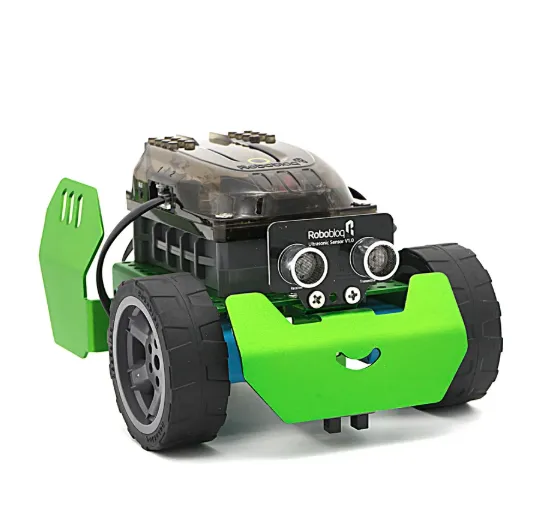
- Ultrasonic sensor for obstacle detection and avoidance.
- Line-tracking sensor for autonomous route following.
- Remote control through a compatible mobile application.
- Multiple operating and autonomous modes.
- Stronger motors for improved movement performance.
- Durable ABS components and alloy construction.
- Rubber tires designed for indoor and outdoor surfaces.
- Expandable platform supporting additional Robobloq modules.
- Suitable for STEM education, robotics clubs, classrooms, and home learning.
Principle of Operation
Q-Scout combines a programmable controller with motors, sensors, and a mechanical robot platform. The controller receives commands from the selected programming environment or mobile application and uses the connected sensors to determine how the robot should respond.
In remote-control mode, commands are sent to the robot through the compatible application, allowing the user to control movement and other supported functions.
In line-following mode, the line-tracking sensor detects changes in the surface beneath the robot. The controller processes the sensor signals and adjusts the motors to keep the robot following a designated path.
In obstacle-avoidance mode, the ultrasonic sensor measures the distance to objects in front of the robot. When an obstacle is detected within the configured detection area, the controller can change the robot's movement direction to avoid the object.
The programmable architecture allows users to modify these behaviors and create their own robotic functions, providing a practical introduction to sensors, motors, control logic, and programming.
Applications
- STEM and robotics education.
- Beginner coding education.
- Scratch programming projects.
- Arduino robotics projects.
- Python robotics experiments.
- Line-following robot projects.
- Obstacle-avoidance robot projects.
- Mobile-controlled robotics.
- Robotics clubs and classroom activities.
- Hands-on mechanical engineering education.
- Programming and electronics workshops.
- Robot prototyping and experimentation.
Programming
Q-Scout provides a progressive programming experience, allowing users to start with graphical programming and gradually move toward text-based development. This makes the kit suitable for different experience levels.

| Programming Environment | Suitable For |
|---|---|
| Scratch 3.0 | Beginners learning programming concepts through graphical blocks. |
| Arduino | Users learning microcontroller programming and robot control. |
| Python | More advanced programming and robotics experimentation. |
Robot Functions
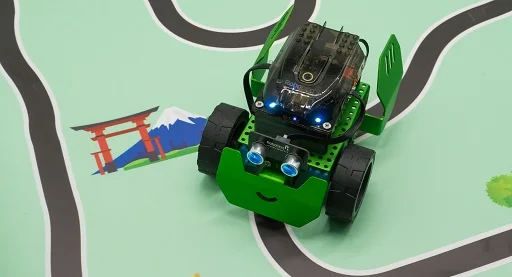
| Function | Description |
|---|---|
| Remote Control | Allows the robot to be manually controlled using a compatible application. |
| Line Following | Uses the line-tracking sensor to follow a designated path. |
| Obstacle Avoidance | Uses ultrasonic distance sensing to detect obstacles and change movement. |
| Programmable Movement | Allows custom movement and control behaviors to be created through programming. |
| Robot Transformation | Mechanical platform can be modified using compatible expansion components. |
Mechanical Platform
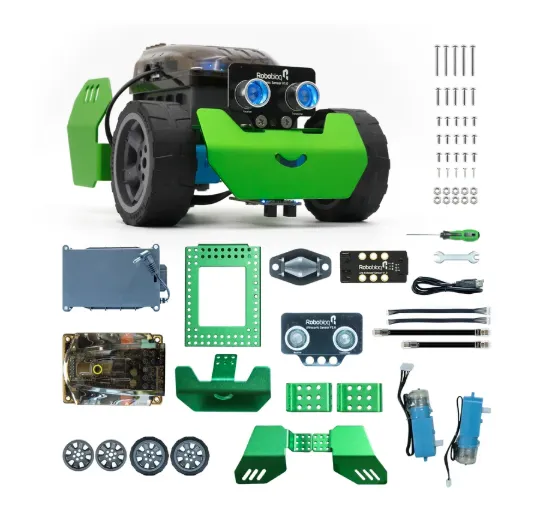
Q-Scout uses a metal robot-building platform that provides a practical introduction to mechanical assembly and robotics construction. The combination of metal structural components, ABS parts, motors, and rubber tires creates a durable platform for repeated assembly and experimentation.

The platform is designed to support expansion, allowing additional Robobloq sensors and electronic modules to be incorporated into future projects. This gives users the opportunity to progress from a basic mobile robot to more complex robotic systems.
Sensors and Electronics
| Component | Function |
|---|---|
| Ultrasonic Sensor | Measures the distance to objects and supports obstacle detection and avoidance. |
| Line-Tracking Sensor | Detects a designated line or path for autonomous navigation. |
| Motors | Drive the robot's wheels and provide controlled movement. |
| Robot Controller | Processes programming commands and sensor information to control the robot. |
| Wireless Control | Enables compatible mobile-app-based robot control. |
Assembly
The Q-Scout kit is designed to provide an accessible robot-building experience. Users assemble the mechanical structure, install the motors and electronic modules, and configure the robot according to the supplied instructions.
The modular construction allows the robot to be modified and expanded as the user's skills develop. This combination of mechanical assembly, electronics, sensors, and programming provides a complete hands-on robotics learning experience.
Technical Specifications
| Parameter | Specification |
|---|---|
| Product | Robobloq Q-Scout Starter Building Kit |
| Product Type | Programmable educational robot kit |
| Programming | Scratch 3.0, Arduino, Python |
| Robot Type | Mobile programmable robot |
| Construction | Metal and ABS components |
| Drive System | Motor-driven wheels |
| Obstacle Detection | Ultrasonic sensor |
| Line Detection | Line-tracking sensor |
| Control | Programmable and compatible mobile-app control |
| Expansion | Compatible Robobloq expansion packages and modules |
| Use Environment | Indoor and suitable outdoor surfaces |
| Educational Level | Beginner to advanced learners |
Important Notes
- The Q-Scout is an educational robotics platform and should be used under appropriate supervision when required.
- Programming features and supported functions may depend on the installed software, firmware, and connected modules.
- Additional Robobloq expansion packages may be required for certain advanced robot configurations.
- Actual outdoor performance depends on the terrain and operating conditions.
- Keep the robot and electronic components away from water unless the specific component is designed for exposure to moisture.
- Software and application compatibility may vary depending on the operating system and product version.
Features
- Programmable educational robot for beginners and advanced learners.
- Supports graphical Scratch 3.0 programming.
- Supports Arduino-based programming and development.
- Suitable for Python-based programming and advanced projects.
- Metal robot-building platform for hands-on mechanical learning.
- Easy assembly suitable for beginners.
- Can be assembled and transformed into different configurations.
- Ultrasonic sensor for obstacle detection and avoidance.
- Line-tracking sensor for autonomous route following.
- Remote control through a compatible mobile application.
- Multiple operating and autonomous modes.
- Stronger motors for improved movement performance.
- Durable ABS components and alloy construction.
- Rubber tires designed for indoor and outdoor surfaces.
- Expandable platform supporting additional Robobloq modules.
- Suitable for STEM education, robotics clubs, classrooms, and home learning.
Principle of Operation
Q-Scout combines a programmable controller with motors, sensors, and a mechanical robot platform. The controller receives commands from the selected programming environment or mobile application and uses the connected sensors to determine how the robot should respond.
In remote-control mode, commands are sent to the robot through the compatible application, allowing the user to control movement and other supported functions.
In line-following mode, the line-tracking sensor detects changes in the surface beneath the robot. The controller processes the sensor signals and adjusts the motors to keep the robot following a designated path.
In obstacle-avoidance mode, the ultrasonic sensor measures the distance to objects in front of the robot. When an obstacle is detected within the configured detection area, the controller can change the robot's movement direction to avoid the object.
The programmable architecture allows users to modify these behaviors and create their own robotic functions, providing a practical introduction to sensors, motors, control logic, and programming.
Applications
- STEM and robotics education.
- Beginner coding education.
- Scratch programming projects.
- Arduino robotics projects.
- Python robotics experiments.
- Line-following robot projects.
- Obstacle-avoidance robot projects.
- Mobile-controlled robotics.
- Robotics clubs and classroom activities.
- Hands-on mechanical engineering education.
- Programming and electronics workshops.
- Robot prototyping and experimentation.
Programming
Q-Scout provides a progressive programming experience, allowing users to start with graphical programming and gradually move toward text-based development. This makes the kit suitable for different experience levels.
| Programming Environment | Suitable For |
|---|---|
| Scratch 3.0 | Beginners learning programming concepts through graphical blocks. |
| Arduino | Users learning microcontroller programming and robot control. |
| Python | More advanced programming and robotics experimentation. |
Robot Functions
| Function | Description |
|---|---|
| Remote Control | Allows the robot to be manually controlled using a compatible application. |
| Line Following | Uses the line-tracking sensor to follow a designated path. |
| Obstacle Avoidance | Uses ultrasonic distance sensing to detect obstacles and change movement. |
| Programmable Movement | Allows custom movement and control behaviors to be created through programming. |
| Robot Transformation | Mechanical platform can be modified using compatible expansion components. |
Mechanical Platform
Q-Scout uses a metal robot-building platform that provides a practical introduction to mechanical assembly and robotics construction. The combination of metal structural components, ABS parts, motors, and rubber tires creates a durable platform for repeated assembly and experimentation.
The platform is designed to support expansion, allowing additional Robobloq sensors and electronic modules to be incorporated into future projects. This gives users the opportunity to progress from a basic mobile robot to more complex robotic systems.
Sensors and Electronics
| Component | Function |
|---|---|
| Ultrasonic Sensor | Measures the distance to objects and supports obstacle detection and avoidance. |
| Line-Tracking Sensor | Detects a designated line or path for autonomous navigation. |
| Motors | Drive the robot's wheels and provide controlled movement. |
| Robot Controller | Processes programming commands and sensor information to control the robot. |
| Wireless Control | Enables compatible mobile-app-based robot control. |
Assembly
The Q-Scout kit is designed to provide an accessible robot-building experience. Users assemble the mechanical structure, install the motors and electronic modules, and configure the robot according to the supplied instructions.
The modular construction allows the robot to be modified and expanded as the user's skills develop. This combination of mechanical assembly, electronics, sensors, and programming provides a complete hands-on robotics learning experience.
Technical Specifications
| Parameter | Specification |
|---|---|
| Product | Robobloq Q-Scout Starter Building Kit |
| Product Type | Programmable educational robot kit |
| Programming | Scratch 3.0, Arduino, Python |
| Robot Type | Mobile programmable robot |
| Construction | Metal and ABS components |
| Drive System | Motor-driven wheels |
| Obstacle Detection | Ultrasonic sensor |
| Line Detection | Line-tracking sensor |
| Control | Programmable and compatible mobile-app control |
| Expansion | Compatible Robobloq expansion packages and modules |
| Use Environment | Indoor and suitable outdoor surfaces |
| Educational Level | Beginner to advanced learners |
Important Notes
- The Q-Scout is an educational robotics platform and should be used under appropriate supervision when required.
- Programming features and supported functions may depend on the installed software, firmware, and connected modules.
- Additional Robobloq expansion packages may be required for certain advanced robot configurations.
- Actual outdoor performance depends on the terrain and operating conditions.
- Keep the robot and electronic components away from water unless the specific component is designed for exposure to moisture.
- Software and application compatibility may vary depending on the operating system and product version.