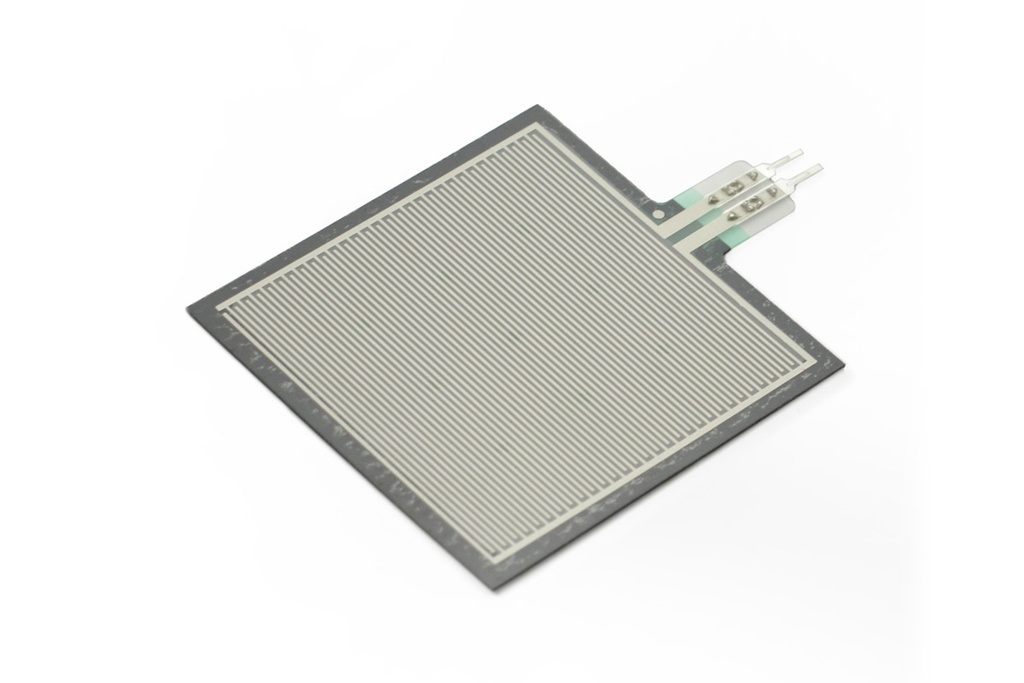
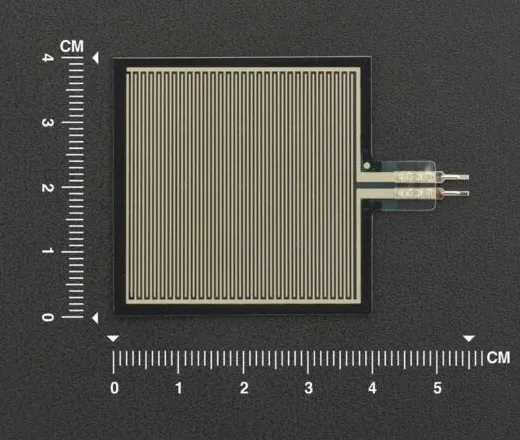
The RP-S series sensors are constructed using ultra thin flexible films combined with conductive materials and nano scale pressure sensitive layers. When pressure is applied to the sensing surface, the conductive layers come into contact through the pressure sensitive material, causing the resistance to decrease as the applied force increases.
Because of its large sensing surface and flexible design, the sensor is widely used in pressure detection systems, smart seating systems, bed monitoring, wearable electronics, robotics, and human interaction sensing.
Working Principle
The pressure sensor consists of two thin layers. The upper layer contains a pressure sensitive conductive material while the lower layer contains conductive traces. In the absence of pressure, the resistance between the sensor terminals is extremely high.
When pressure is applied to the sensing area, the pressure sensitive layer connects the conductive traces, forming a conductive path. The resistance decreases as the applied pressure increases. This change in resistance can be measured using a voltage divider circuit connected to a microcontroller analog input.
Features
- Large area thin film pressure sensor
- Flexible and lightweight structure
- High sensitivity force detection
- Supports static and dynamic pressure measurement
- Fast response and activation time
- Wide pressure sensing surface
- Long operational lifespan
- Simple analog interface using resistance change
- Suitable for embedded sensing and human interaction systems
Specifications
- Model: RP-S40-ST
- Product SKU: SEN0296
- Sensor Type: Thin Film Force Sensitive Pressure Sensor
- Sensing Area Size: 40 mm x 40 mm
- Thickness: 0.3 mm
- Trigger Force: 30 g (trigger when resistance less than 200 kΩ)
- Pressure Measurement Range: 30 g to 1.5 kg
- Measurement Method: Static and Dynamic Pressure Measurement
- Initial Resistance: Greater than 10 MΩ
- Activation Time: Less than 0.01 seconds
- Response Time: Less than 10 ms
- Operating Temperature: -40 C to 85 C
- Lifespan: More than 1 million cycles
- Hysteresis: Approximately 10 percent at 1000 g force
- Drift: Less than 5 percent at 1 kg static load for 24 hours
- EMI: Not generated
- ESD: Not generated
Applications
- Bed monitoring and occupancy detection
- Smart seating and pressure distribution systems
- Wearable electronics
- Medical monitoring devices
- Robotics and touch sensing
- Human machine interaction
- Force measurement systems
Basic Connection
The sensor operates as a variable resistor. It is typically connected in a voltage divider configuration with a fixed resistor. The resulting voltage can be measured using the analog input of a microcontroller such as Arduino, ESP32, or other development boards to determine the applied pressure.

Sample Code
/***************************************************
 * Piezo Vibration Sensor
 ****************************************************
 * This example: The sensors detect vibration
 * @author linfeng([email protected])
 * @version V1.0
 * @date 2016-2-26
 * GNU Lesser General Public License.
 * All above must be included in any redistribution
 ****************************************************/
#define sensorPin A0
void setup() {
Serial.begin(115200);
}
void loop() {
int x = analogRead(sensorPin);
Serial.println(x);
delay(50);
}
Expected Results
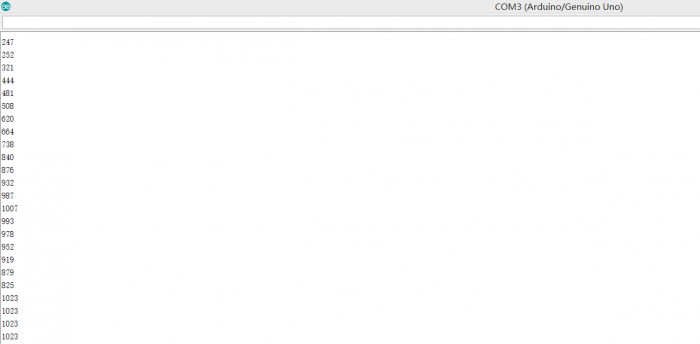
The serial output changes as shown when the sensor is pressed. The serial data decreases linearly as the force increases. It is recommended to use the sensor for qualitative measurements.
The RP-S series sensors are constructed using ultra thin flexible films combined with conductive materials and nano scale pressure sensitive layers. When pressure is applied to the sensing surface, the conductive layers come into contact through the pressure sensitive material, causing the resistance to decrease as the applied force increases.
Because of its large sensing surface and flexible design, the sensor is widely used in pressure detection systems, smart seating systems, bed monitoring, wearable electronics, robotics, and human interaction sensing.
Working Principle
The pressure sensor consists of two thin layers. The upper layer contains a pressure sensitive conductive material while the lower layer contains conductive traces. In the absence of pressure, the resistance between the sensor terminals is extremely high.
When pressure is applied to the sensing area, the pressure sensitive layer connects the conductive traces, forming a conductive path. The resistance decreases as the applied pressure increases. This change in resistance can be measured using a voltage divider circuit connected to a microcontroller analog input.
Features
- Large area thin film pressure sensor
- Flexible and lightweight structure
- High sensitivity force detection
- Supports static and dynamic pressure measurement
- Fast response and activation time
- Wide pressure sensing surface
- Long operational lifespan
- Simple analog interface using resistance change
- Suitable for embedded sensing and human interaction systems
Specifications
- Model: RP-S40-ST
- Product SKU: SEN0296
- Sensor Type: Thin Film Force Sensitive Pressure Sensor
- Sensing Area Size: 40 mm x 40 mm
- Thickness: 0.3 mm
- Trigger Force: 30 g (trigger when resistance less than 200 kΩ)
- Pressure Measurement Range: 30 g to 1.5 kg
- Measurement Method: Static and Dynamic Pressure Measurement
- Initial Resistance: Greater than 10 MΩ
- Activation Time: Less than 0.01 seconds
- Response Time: Less than 10 ms
- Operating Temperature: -40 C to 85 C
- Lifespan: More than 1 million cycles
- Hysteresis: Approximately 10 percent at 1000 g force
- Drift: Less than 5 percent at 1 kg static load for 24 hours
- EMI: Not generated
- ESD: Not generated
Applications
- Bed monitoring and occupancy detection
- Smart seating and pressure distribution systems
- Wearable electronics
- Medical monitoring devices
- Robotics and touch sensing
- Human machine interaction
- Force measurement systems
Basic Connection
The sensor operates as a variable resistor. It is typically connected in a voltage divider configuration with a fixed resistor. The resulting voltage can be measured using the analog input of a microcontroller such as Arduino, ESP32, or other development boards to determine the applied pressure.
Sample Code
/***************************************************
 * Piezo Vibration Sensor
 ****************************************************
 * This example: The sensors detect vibration
 * @author linfeng([email protected])
 * @version V1.0
 * @date 2016-2-26
 * GNU Lesser General Public License.
 * All above must be included in any redistribution
 ****************************************************/
#define sensorPin A0
void setup() {
Serial.begin(115200);
}
void loop() {
int x = analogRead(sensorPin);
Serial.println(x);
delay(50);
}
Expected Results
The serial output changes as shown when the sensor is pressed. The serial data decreases linearly as the force increases. It is recommended to use the sensor for qualitative measurements.