- All products
- Sensors & Modules
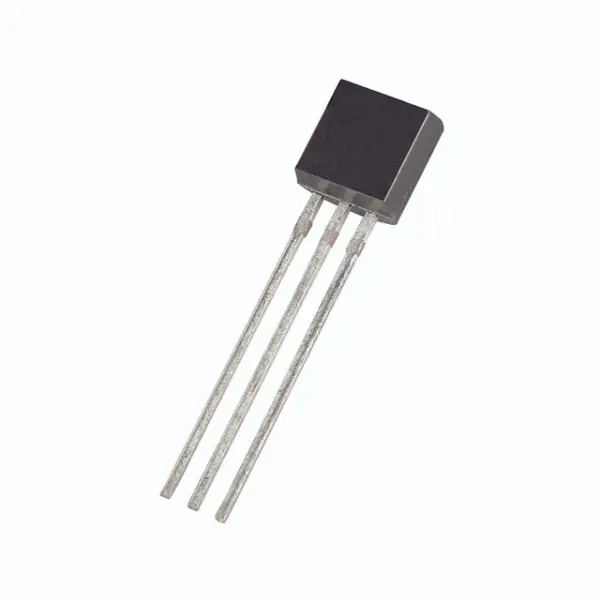
- Temperature Sensor LM35
- Sensors & Modules
Features:
- Centigrade Calibration: The LM35 is calibrated in Celsius, making it ideal for applications where temperature needs to be directly measured in degrees Celsius.
- Cost-Effective Wafer-Level Calibration: It’s affordable due to its calibration at the wafer level.
- Linear Scale Factor: The sensor has a linear output of 10 mV per degree Celsius, making temperature readings straightforward to interpret.
- Low Self-Heating: The LM35 generates minimal self-heating (just 0.08°C in still air), which ensures accuracy.
- No External Calibration Needed: The LM35 is pre-calibrated, so it doesn't require additional calibration.
- Single Power Supply Compatibility: It operates with a single power supply, adding versatility to its use.
Applications:
- Climate Control Systems: Used in HVAC systems to regulate indoor temperatures.
- Industrial Automation: Helps monitor machinery temperature, preventing overheating.
- Weather Stations: Measures temperature in meteorological stations.
- Medical Devices: Found in incubators and fever monitoring systems.
- Home Appliances: Ensures proper temperature regulation in appliances like refrigerators and ovens.
- Environmental Monitoring: Measures temperature changes in ecosystems.
- Automotive: Monitors engine temperatures in vehicles.
- Energy Efficiency: Helps regulate systems in energy-efficient buildings.
- Food Processing: Ensures proper temperature during food processing.
- Scientific Research: Used in laboratories for temperature-sensitive experiments.
- Agriculture: Applied in greenhouse temperature monitoring.
Code for Arduino Integration:
#define sensorPin A0

void setup() {
  // Initialize serial communication at 9600 baud rate
  Serial.begin(9600);
}

void loop() {
  // Read the analog voltage from the LM35 sensor
  int rawValue = analogRead(sensorPin);

  // Convert raw reading to voltage (0-5V)
  float voltage = (rawValue / 1023.0) * 5.0;

  // Convert voltage to temperature in Celsius
  float temperatureC = (voltage - 0.5) * 100.0;

  // Print temperature in Celsius
  Serial.print("Temperature: ");
  Serial.print(temperatureC);
  Serial.print("°C | ");

  // Convert Celsius to Fahrenheit
  float temperatureF = (temperatureC * 9.0 / 5.0) + 32.0;
  Serial.print(temperatureF);
  Serial.println("°F");

  // Wait for a second before the next reading
  delay(1000);
}
Circuit:
- Connect the LM35's VCC pin to the 5V pin of the Arduino.
- Connect the OUT pin to the analog pin A0.
- Connect the GND pin to the ground.
Technical Details:
- Operational Voltage: 4 – 30V
- Output Voltage: -1V to 6V
- Output Current: 10mA
- Operating Temperature: -55°C to 150°C
- Accuracy: ±0.5°C at 25°C
Comparisons with NTC Thermistors:
- LM35: Provides direct linear voltage output, is pre-calibrated, and requires no further calibration. Ideal for precise temperature measurements in Celsius.
- NTC Thermistors: Have non-linear characteristics, requiring calibration. While they are often cheaper, they don’t provide a direct output like the LM35 and are less straightforward to use in temperature measurements.
Features:
- Centigrade Calibration: The LM35 is calibrated in Celsius, making it ideal for applications where temperature needs to be directly measured in degrees Celsius.
- Cost-Effective Wafer-Level Calibration: It’s affordable due to its calibration at the wafer level.
- Linear Scale Factor: The sensor has a linear output of 10 mV per degree Celsius, making temperature readings straightforward to interpret.
- Low Self-Heating: The LM35 generates minimal self-heating (just 0.08°C in still air), which ensures accuracy.
- No External Calibration Needed: The LM35 is pre-calibrated, so it doesn't require additional calibration.
- Single Power Supply Compatibility: It operates with a single power supply, adding versatility to its use.
Applications:
- Climate Control Systems: Used in HVAC systems to regulate indoor temperatures.
- Industrial Automation: Helps monitor machinery temperature, preventing overheating.
- Weather Stations: Measures temperature in meteorological stations.
- Medical Devices: Found in incubators and fever monitoring systems.
- Home Appliances: Ensures proper temperature regulation in appliances like refrigerators and ovens.
- Environmental Monitoring: Measures temperature changes in ecosystems.
- Automotive: Monitors engine temperatures in vehicles.
- Energy Efficiency: Helps regulate systems in energy-efficient buildings.
- Food Processing: Ensures proper temperature during food processing.
- Scientific Research: Used in laboratories for temperature-sensitive experiments.
- Agriculture: Applied in greenhouse temperature monitoring.
Code for Arduino Integration:
#define sensorPin A0

void setup() {
  // Initialize serial communication at 9600 baud rate
  Serial.begin(9600);
}

void loop() {
  // Read the analog voltage from the LM35 sensor
  int rawValue = analogRead(sensorPin);

  // Convert raw reading to voltage (0-5V)
  float voltage = (rawValue / 1023.0) * 5.0;

  // Convert voltage to temperature in Celsius
  float temperatureC = (voltage - 0.5) * 100.0;

  // Print temperature in Celsius
  Serial.print("Temperature: ");
  Serial.print(temperatureC);
  Serial.print("°C | ");

  // Convert Celsius to Fahrenheit
  float temperatureF = (temperatureC * 9.0 / 5.0) + 32.0;
  Serial.print(temperatureF);
  Serial.println("°F");

  // Wait for a second before the next reading
  delay(1000);
}
Circuit:
- Connect the LM35's VCC pin to the 5V pin of the Arduino.
- Connect the OUT pin to the analog pin A0.
- Connect the GND pin to the ground.
Technical Details:
- Operational Voltage: 4 – 30V
- Output Voltage: -1V to 6V
- Output Current: 10mA
- Operating Temperature: -55°C to 150°C
- Accuracy: ±0.5°C at 25°C
Comparisons with NTC Thermistors:
- LM35: Provides direct linear voltage output, is pre-calibrated, and requires no further calibration. Ideal for precise temperature measurements in Celsius.
- NTC Thermistors: Have non-linear characteristics, requiring calibration. While they are often cheaper, they don’t provide a direct output like the LM35 and are less straightforward to use in temperature measurements.